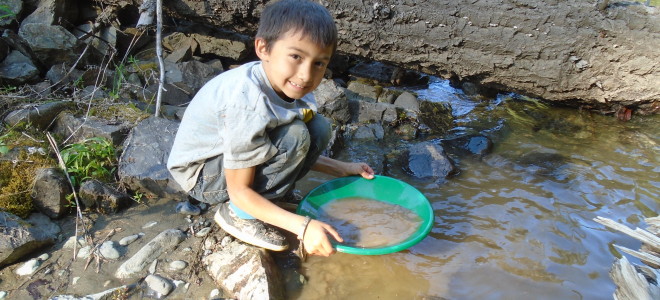
Tulameen Prospecting Trip

Tulameen Prospecting Trip

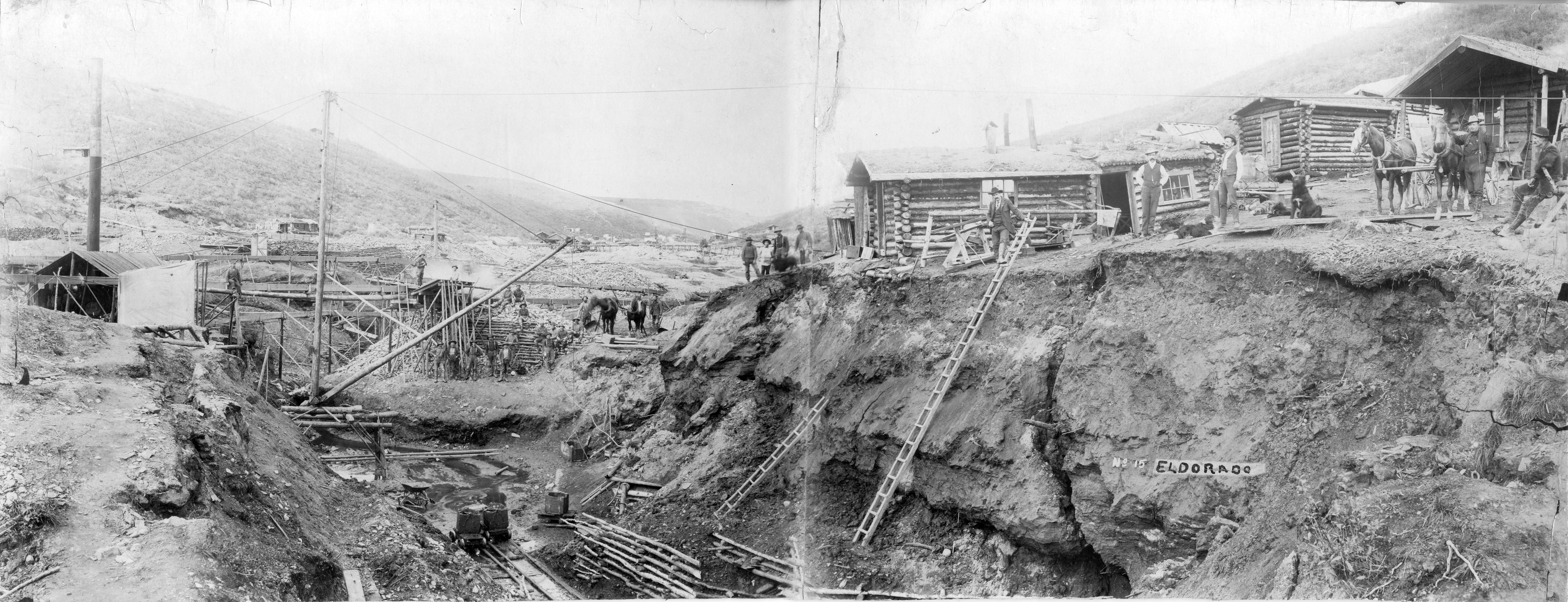
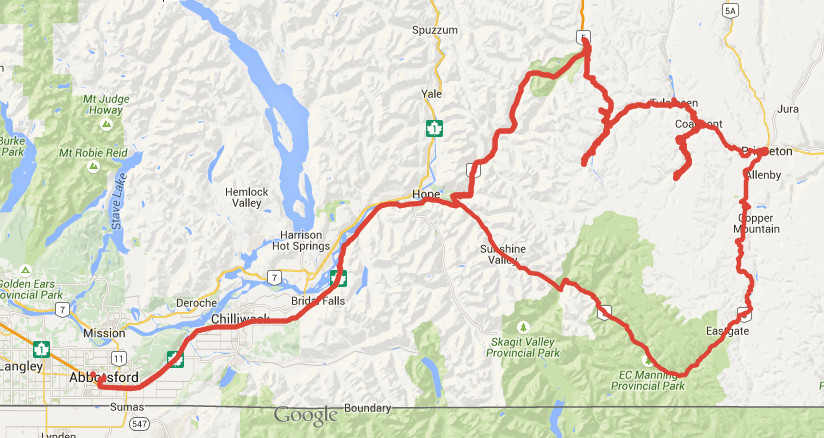
Last weekend I went out to check out some claims on Granite Creek.  This creek experienced a significant gold rush in 1885.  The ghost town of Granite city is at the mouth of the creek, what’s left of it anyway.  Our GPS track is below.
TracksMap

We took Highway 3 from Hope to Princeton then took the backroads through the Tulameen.  The first stop was the Granite City ghost town, then up Granite Creek to my claims.  Later we drove up through the town of Tulameen up the Forestry roads to see Tulameen falls.  We camped nearby and exited the dirt roads at Britton Creek on the Coquihalla highway.  We checked out the Othello tunnels on the way home.  The whole trip was approximately 470km.  My 8 year old son accompanied me on this trip because he had a geography report for school and decided to do it on the history of this area.

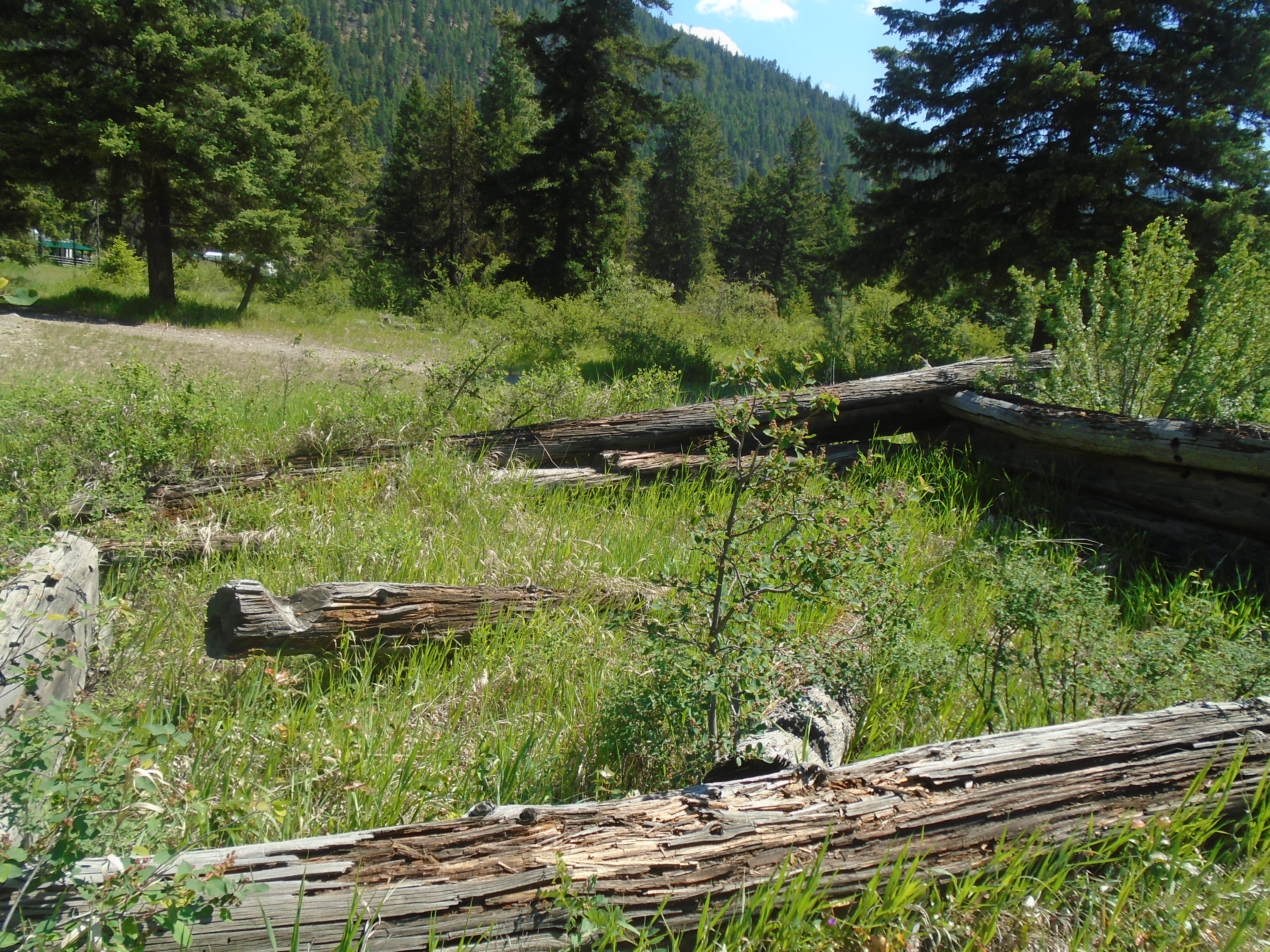
We passed through the hamlet of Coalmont on the way to Granite Creek.  There’s not much there except for a couple of streets with some old buildings and these funny signs.
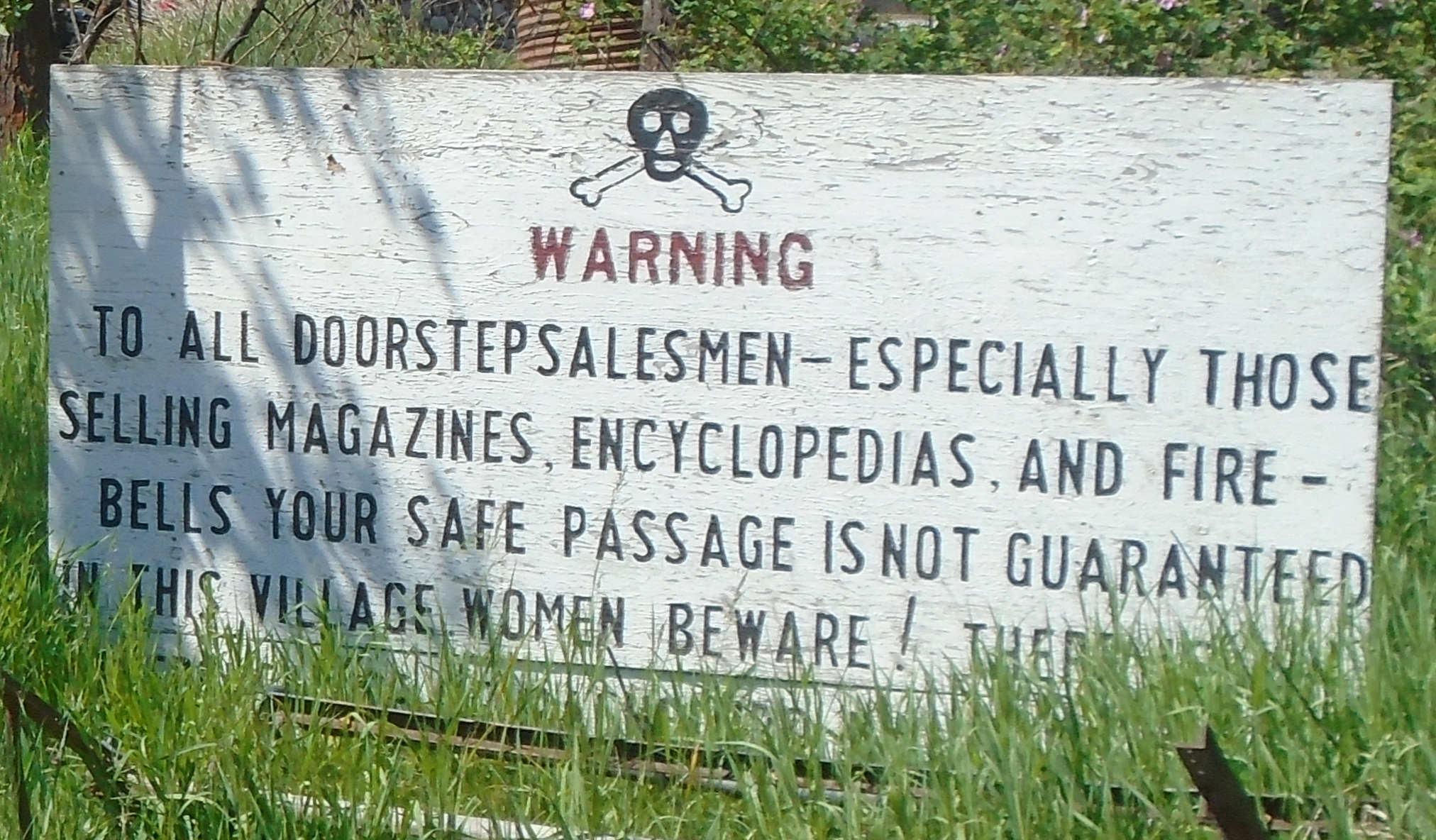
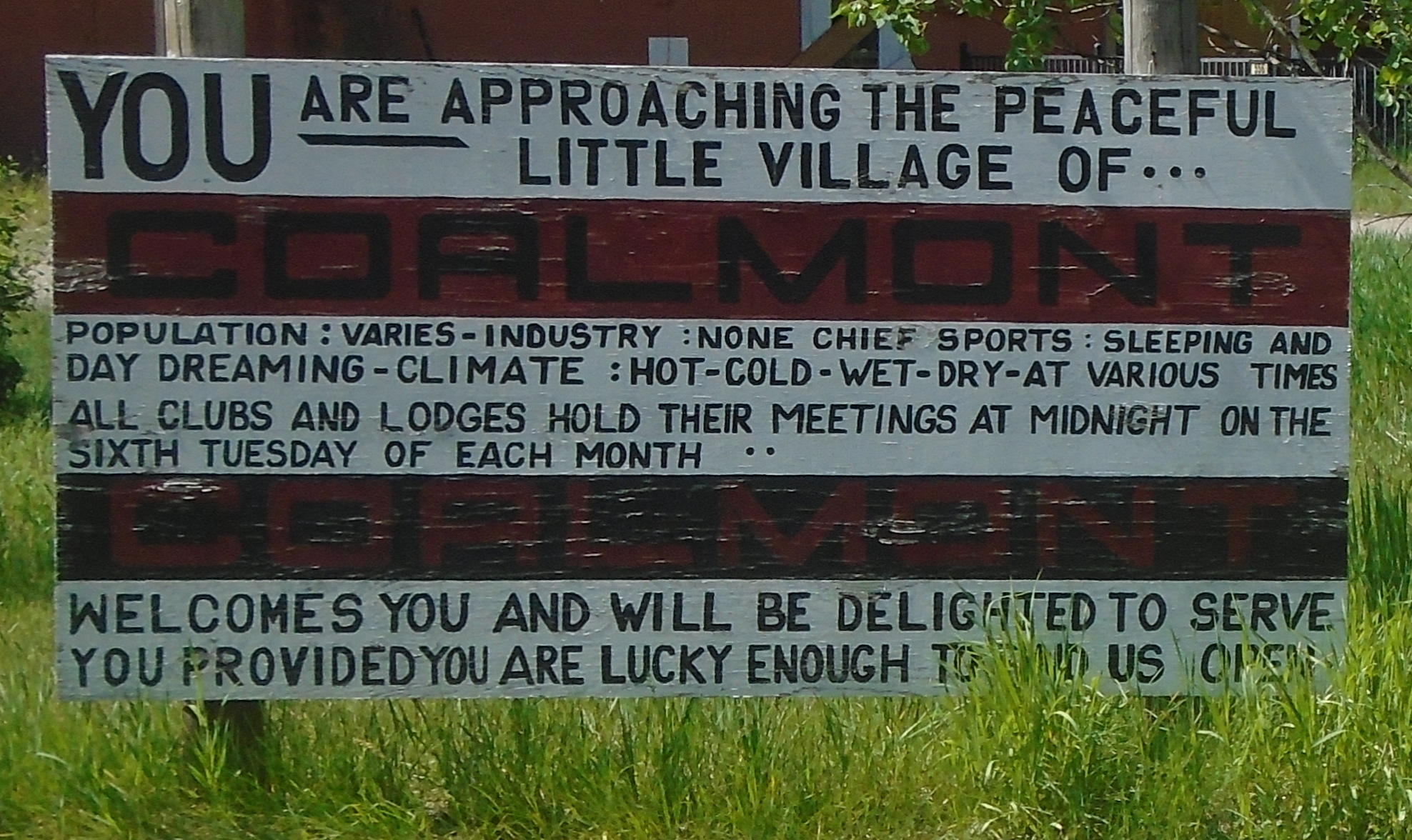
ColmontSign2ColmontSign1

I had been waiting a long time to check out the Granite City ghost town.  It was quite a large city at the height of the gold rush.  There were over two hundred buildings, 13 of which were saloons.  The bars in Granite ran flat out 24/7.  This was a real frontier town with all the ingredients for a great western movie, gunslingers, gamblers and prospectors.  With a population of over two thousand in 1885 Granite City was the third largest city in BC, even larger than Vancouver at the time.
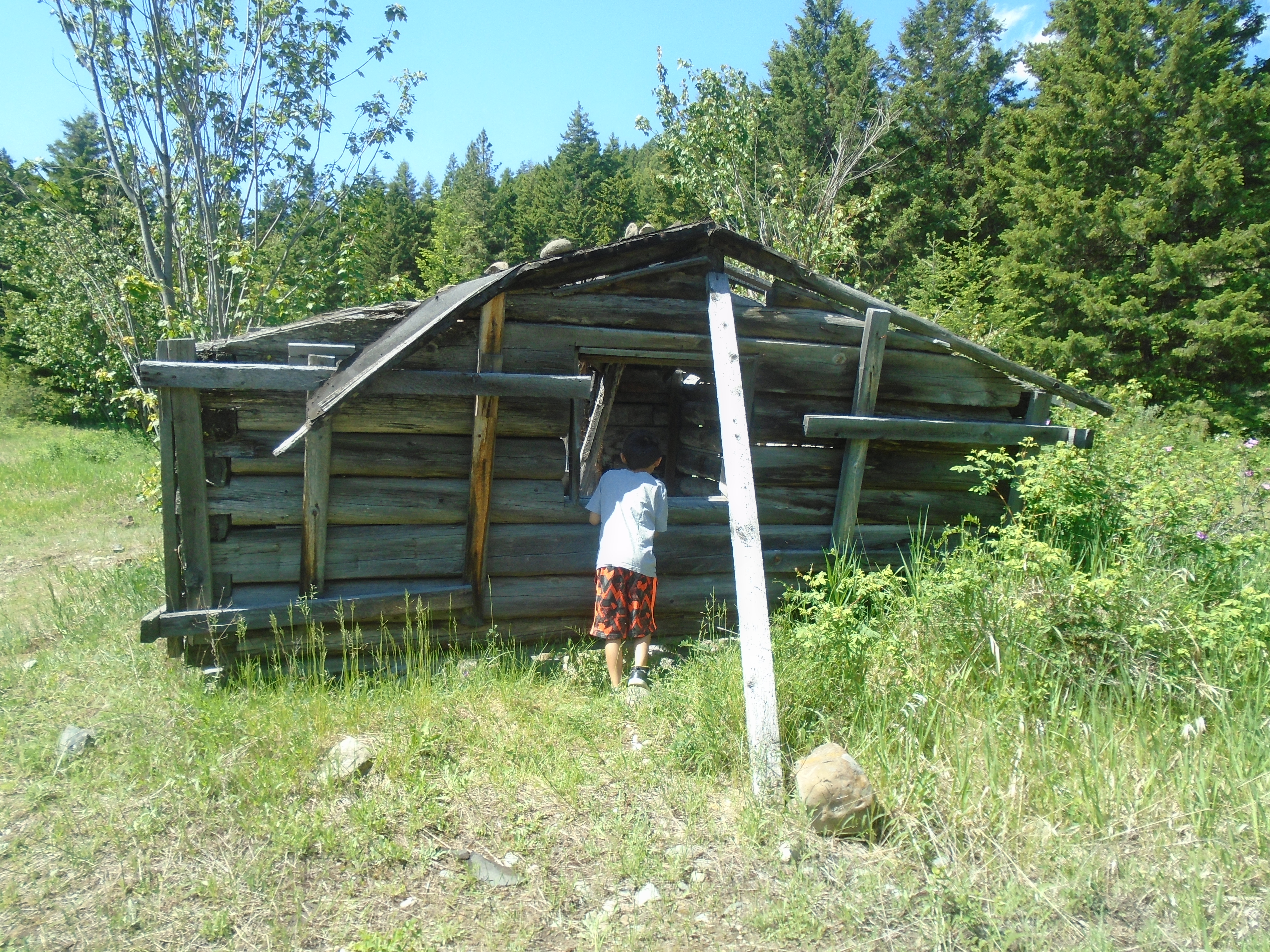
GraniteCity1 GraniteCity2

There are many stories about Granite City, such as the lost platinum cache.  It is interesting that the tributaries of the Tulameen, including Granite Creek, are one of two places in the world where both platinum and gold are found in the creeks.  The other is the Amur river in Russia.  At the beginning of the gold rush in this area the miners were collecting platinum in their gold pans and rockers but they didn’t know what it was.  Platinum is very dense and will sit in the bottom a gold pan the same way gold does.  I have found platinum in my pan before and it took me a couple seconds to realize what it was.  Most miners kept their platinum but many threw it away with their black sands.

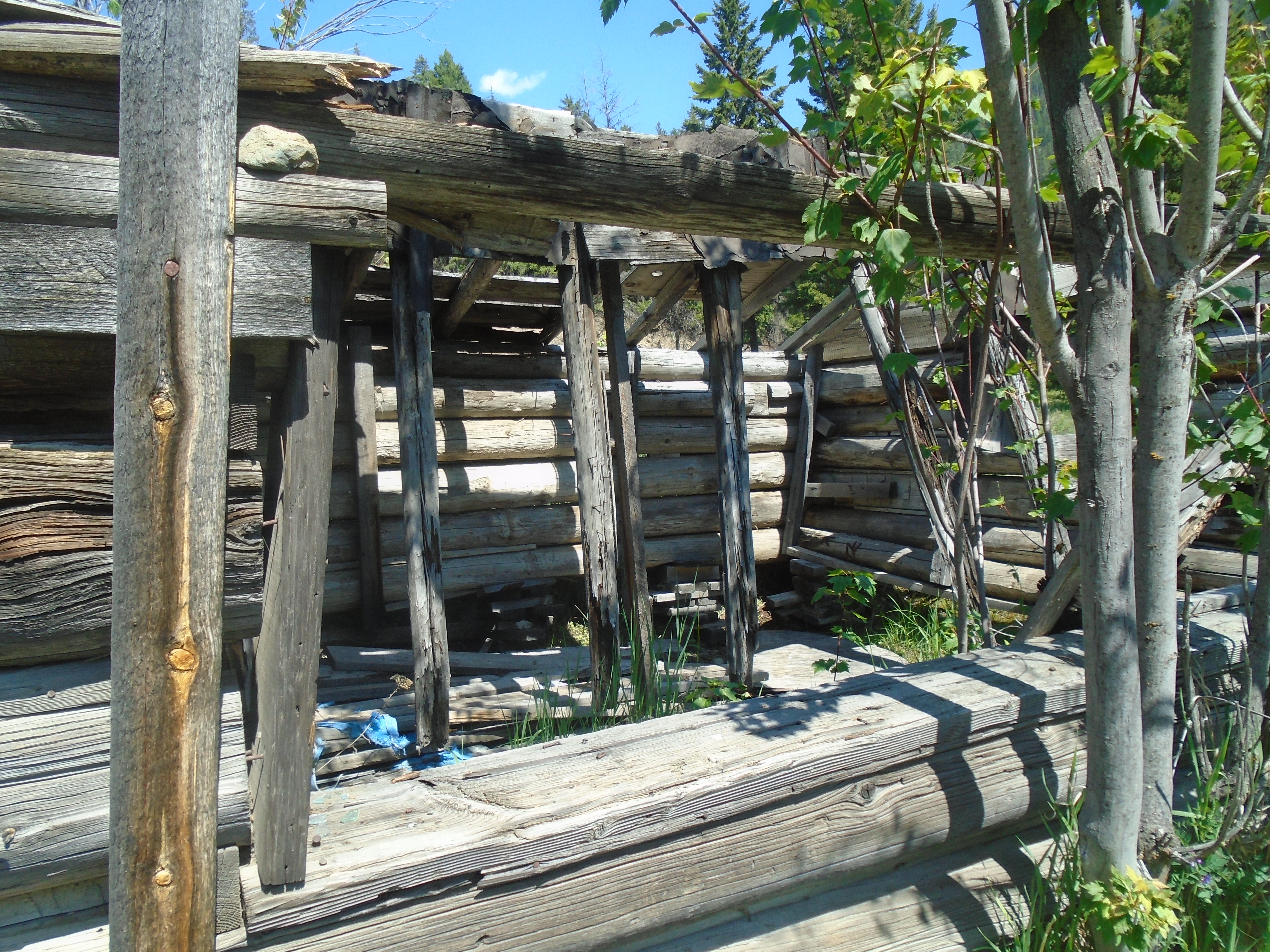
The lost cache legend states that a prospector named Johannson collected platinum from the miners and build up several tin cans full.  He apparently buried his cache within sight of the front door of his cabin with the intention of returning to collect it.  He was never heard from again.  At any rate there is not much left of this gold rush town today.  There are a handful of cabins in various states of decay, a monument and a graveyard.
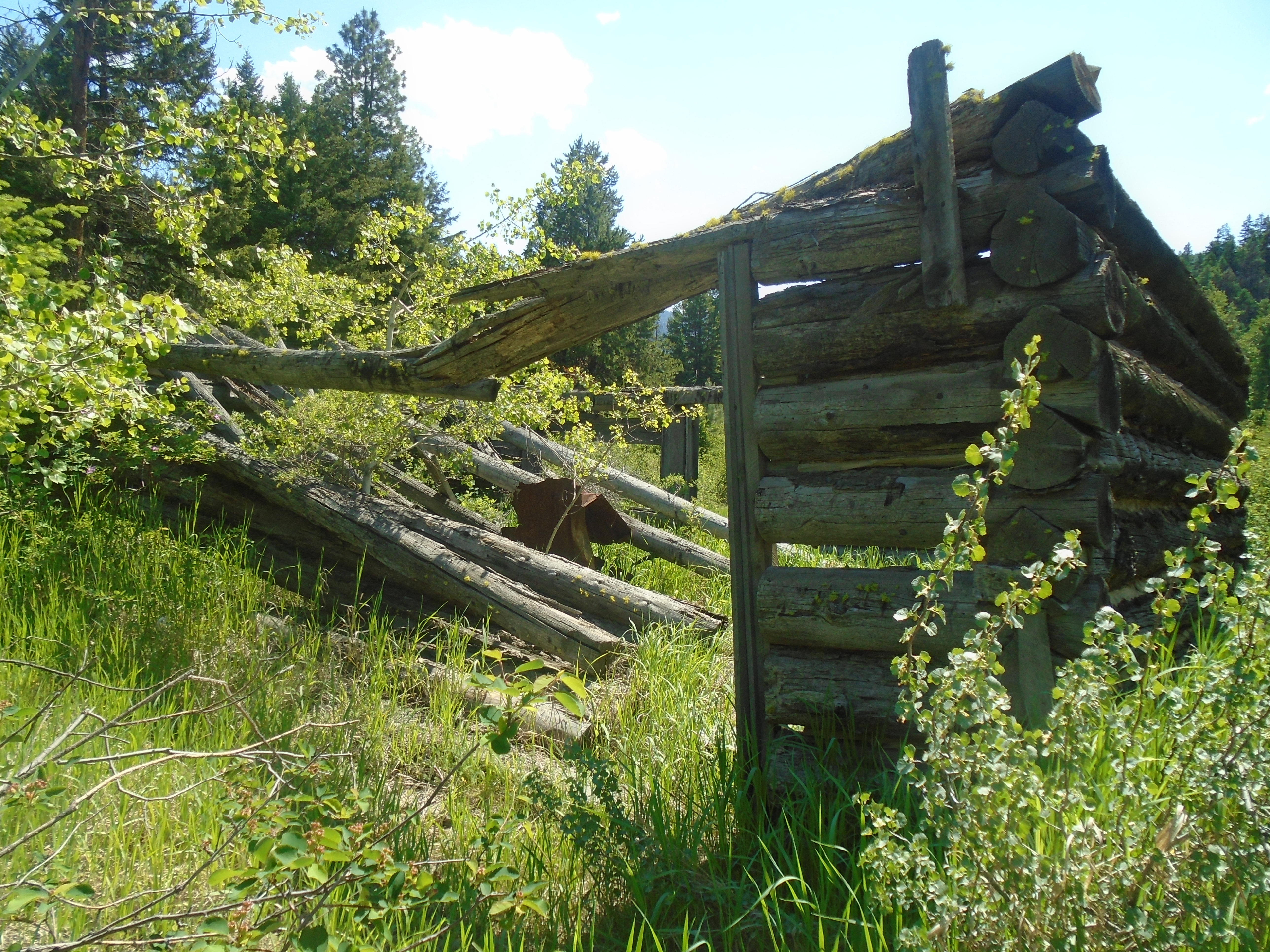
GrantieCabin4GrantiteCabin3

My claims are about 17 kilometers up the road from the old townsite.  We took the Arastra creek forest road up to the confluence of Arastra and Granite creeks.  I met a local prospector while we were up there and he told me Arastra creek got its name because the chinese miners built a large water wheel crusher called and Arastra.  The claims that I have are not directly on the water so we had to bring our samples to the creek to pan.  It was very labor intensive.
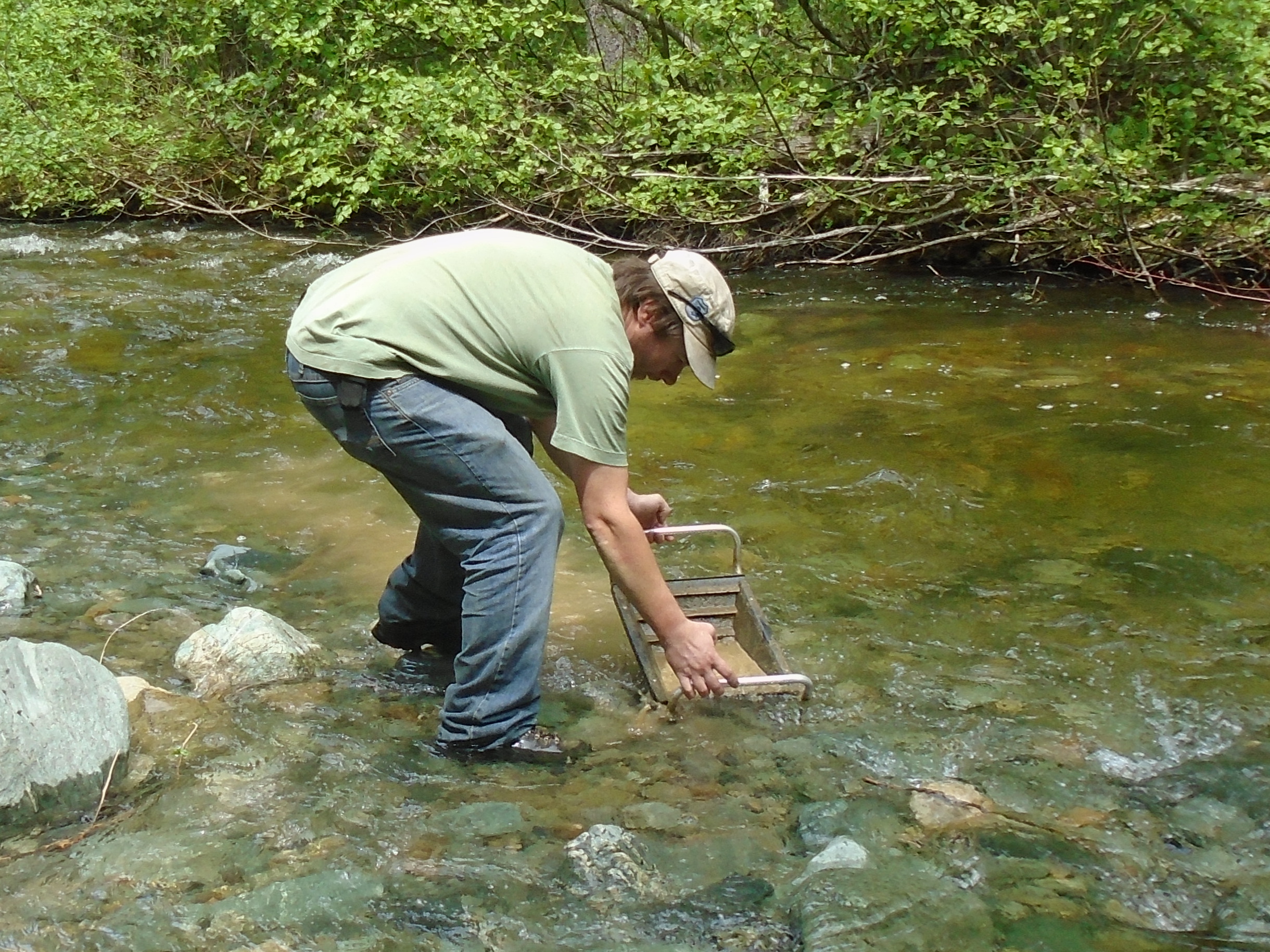
GranitePPan GranitePails

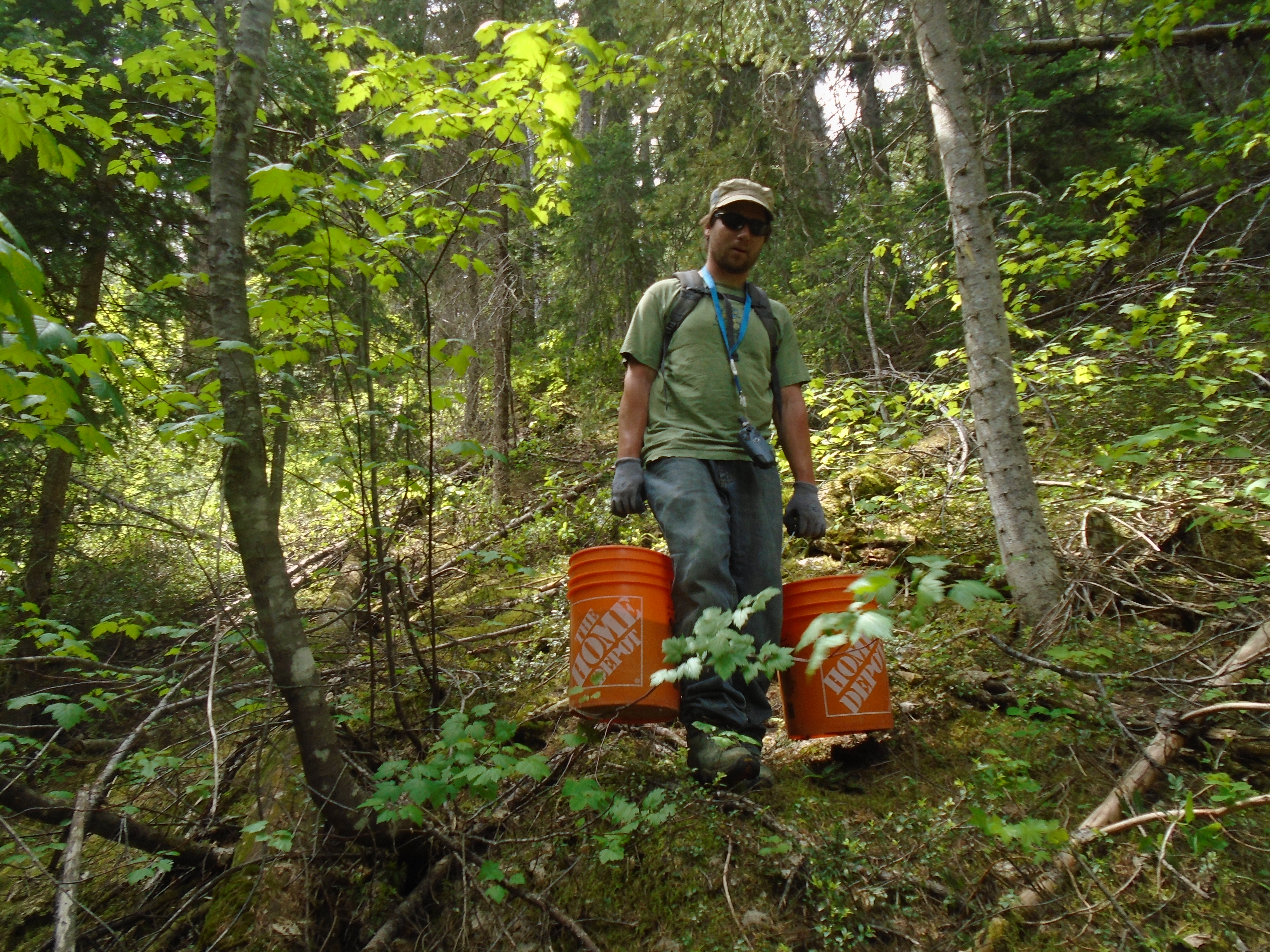
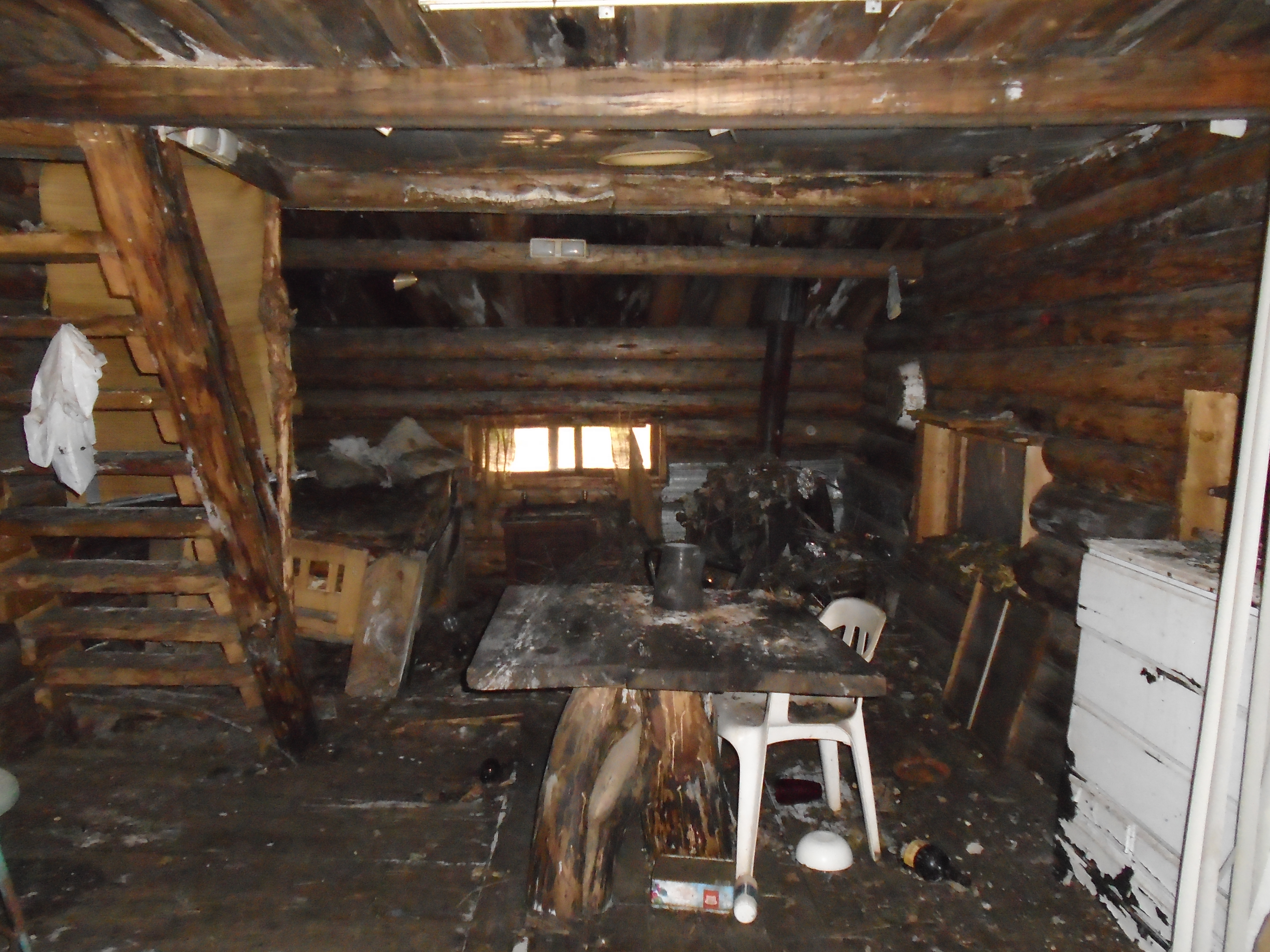
One claim was right off the road so we were able to use my truck to drive the buckets of gravel to the creek.  The second claim required that we hike along Granite creek on a very old trail.  While hiking along the 2km section to my claim one can’t help but imagine what it would have been like out here in the 1880s.  There was evidence of old camps and such all along the way.  We even found an old miner’s cabin that had long since been deserted.
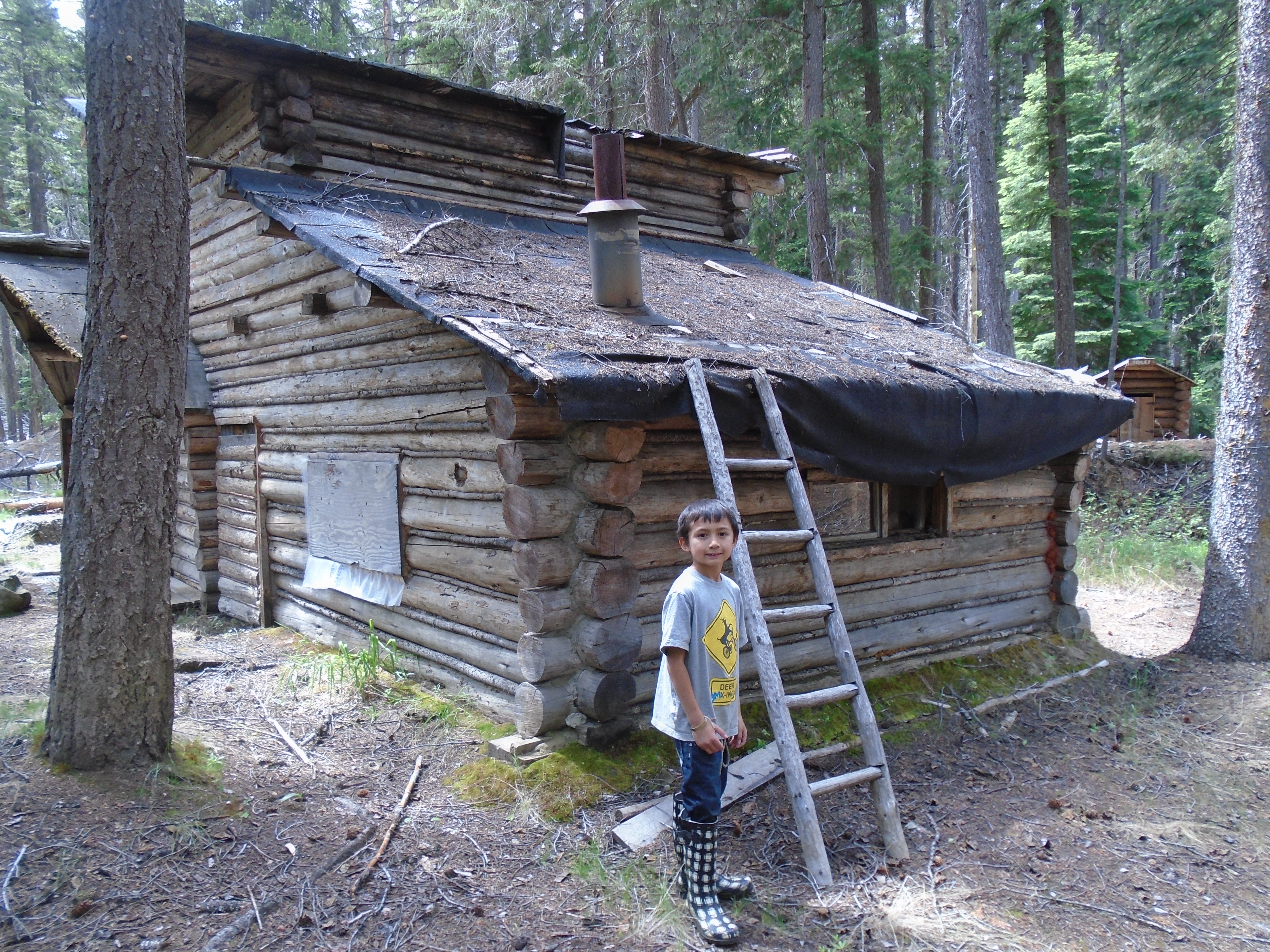
CabinWoods2 CabinWoods

We managed to get a few samples of 20L each.  I concentrated the samples on site with my pyramid pan so I only had to hike out with 1L bags.  We did a few test pans around the area and saw some color.  No platinum though.  After finishing the work on my claims we packed up our camp and headed up the Tulameen to check out an awesome waterfall called Tulameen falls.
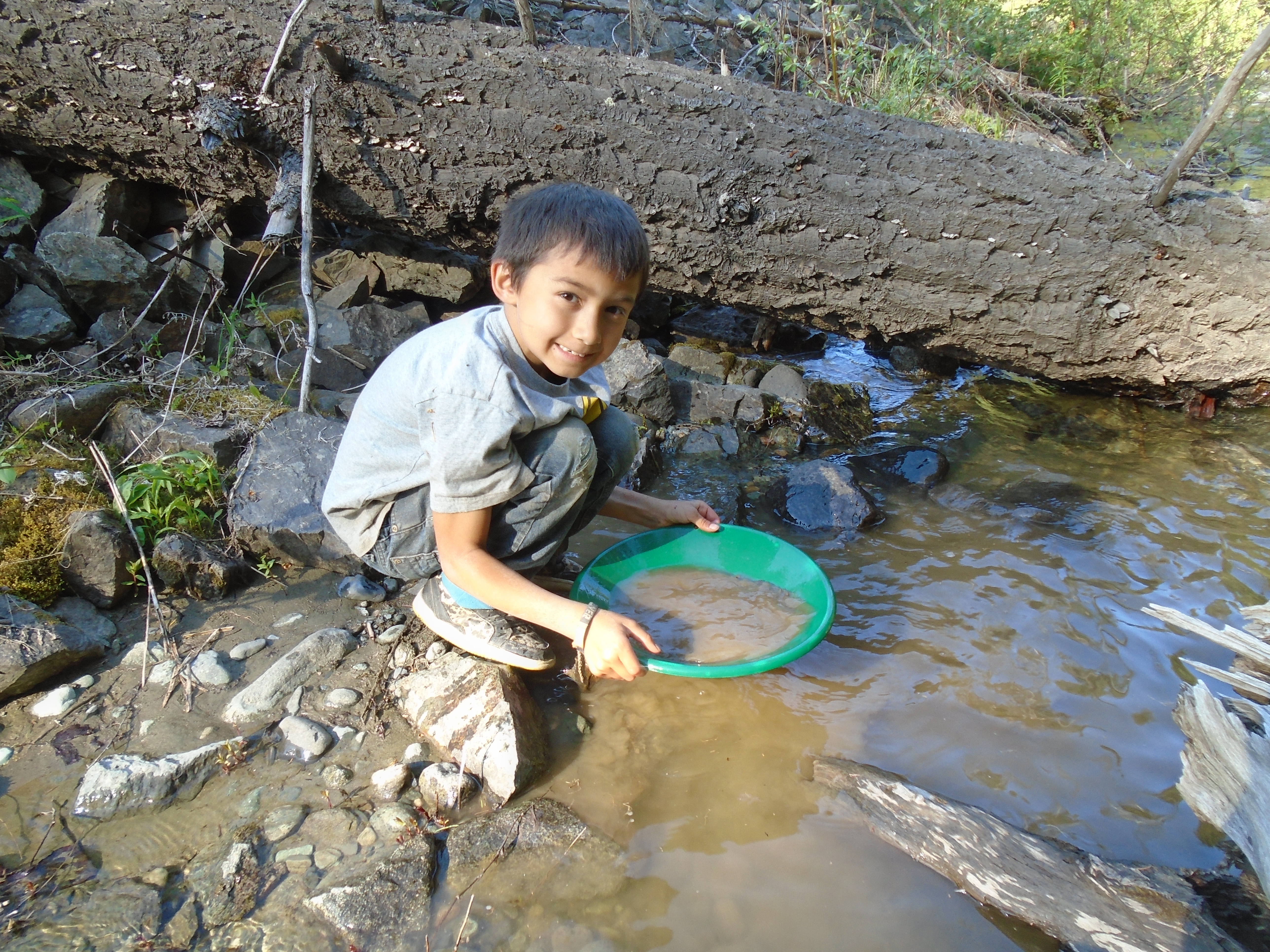
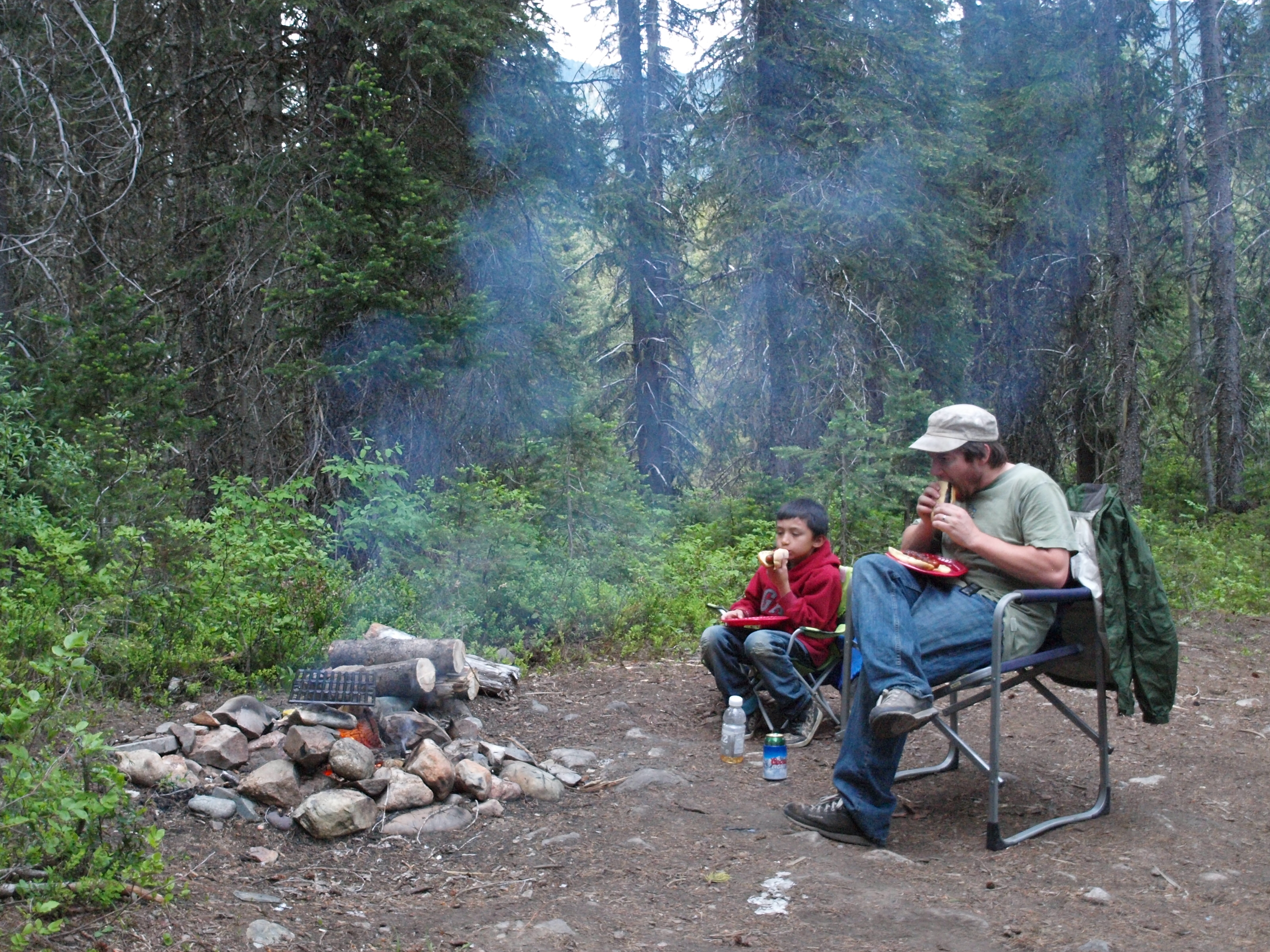
OliverPan OLYMPUS DIGITAL CAMERA

The waterfall is located approximately 30km up the river from the townsite of Tulameen.  The Similkameen tourist pamphlet that we picked up in Princeton said the waterfall is accessed by a 1km moderate hiking trail with two river crossings.  That doesn’t sound too bad.  When we got to the trail head it looked like nothing was there it seems that a forestry operation has moved the road an piled banks of large rocks over the old recreation site.  We found the trail marked by spray paint on a tree.  The first part was not too bad, then we crossed the river in our bare feet to keep our boots dry.  There were signs to only cross in low water but it seemed low enough.  The water was up to my mid thigh but a lot higher on my son.  After that the trail was pretty bad with some sections of no trail at all.  It looked like it was a well maintained trail once but must have been hit with a flood or something.   The waterfall is amazing, it has over 1400 feet of drop and a lot of water pouring over it.
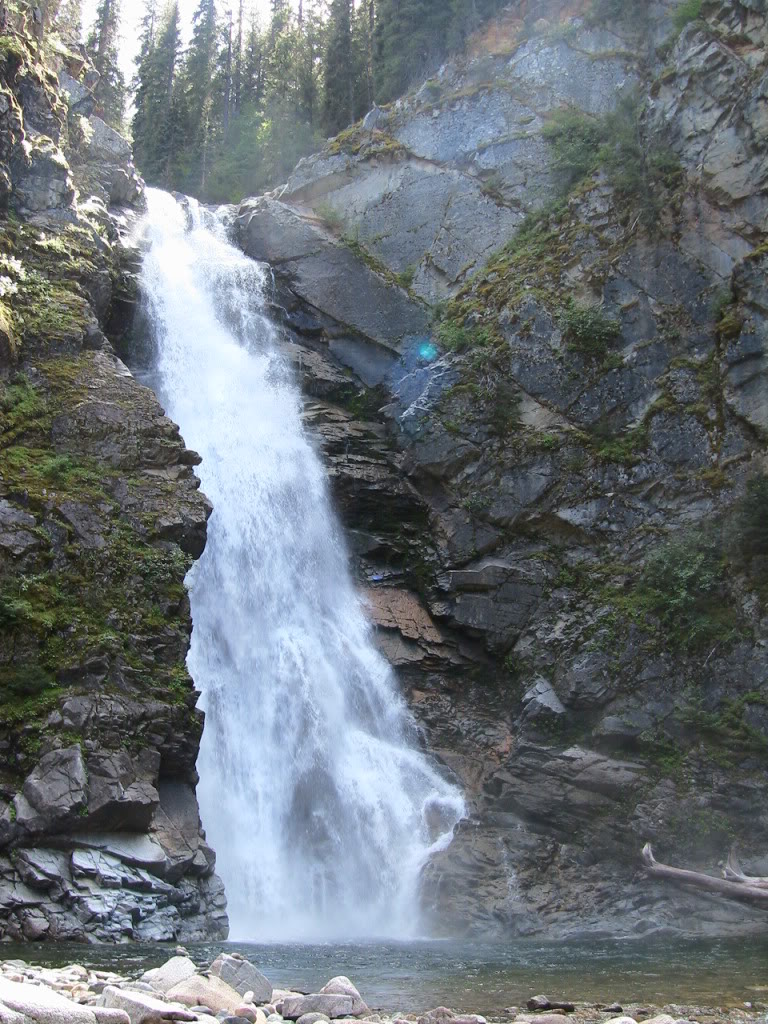
TulameenFalls

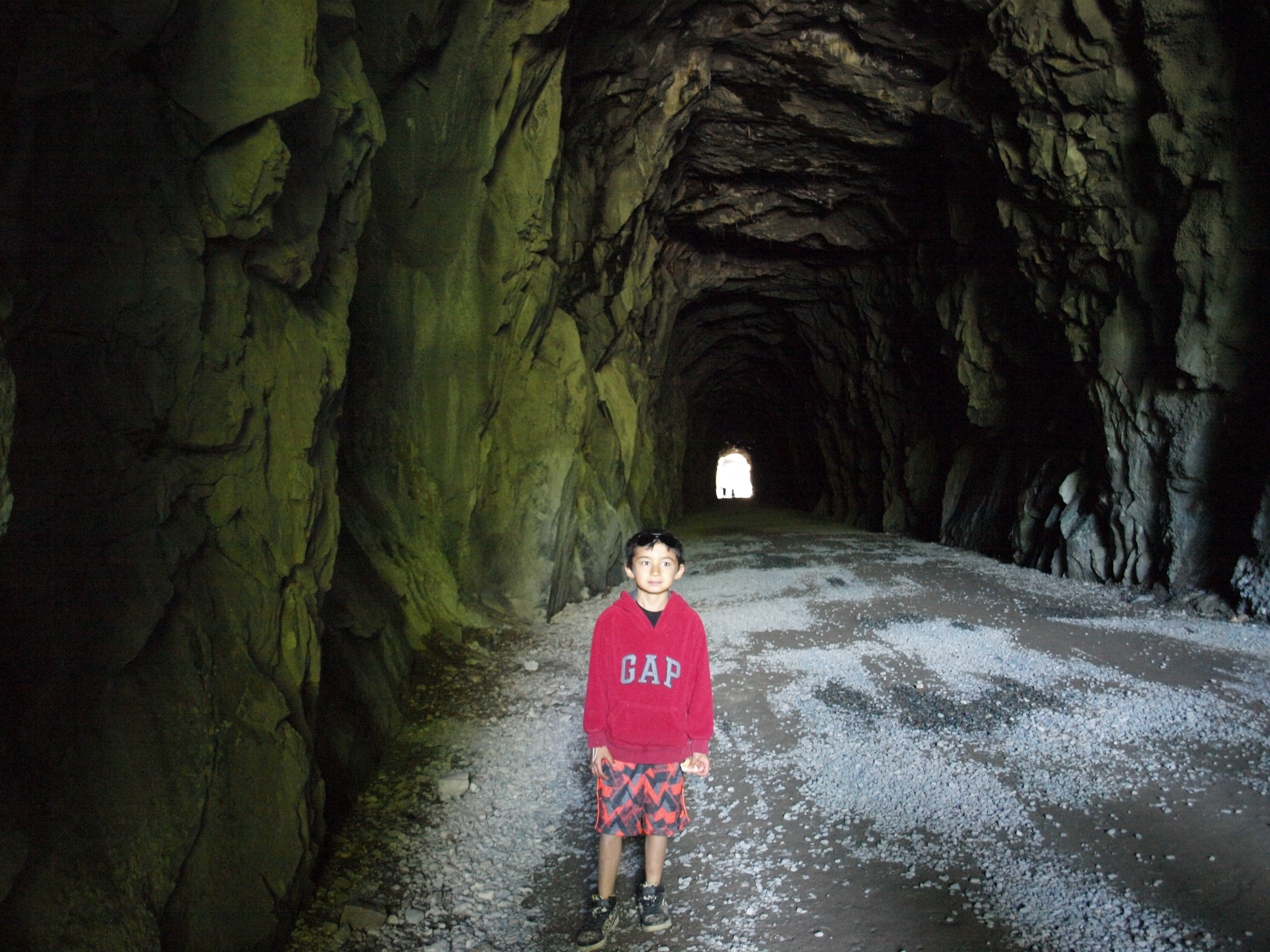
We found a really nice free camp site a few kilometers up the road from the trailhead.  It is called Sutter Creek Recreation Site.  After staying the night we headed back to civilization with one more stop on the way.  We checked out the Othello tunnels just North of Hope.  These tunnels were part of the old Kettle Valley railroad.  The KVR was a steam railroad the serviced the region from Hope to present day Kelowna.  There are five tunnels close together and several bridges to make it possible to access this section of the Coquihalla canyon.  Apparently the lead engineer was a Shakepeare nut and named several of the stations after characters from Shakepeare plays.  There were Othello, Romeo, Juliet, Lear, Jessica, Shylock and Portia.
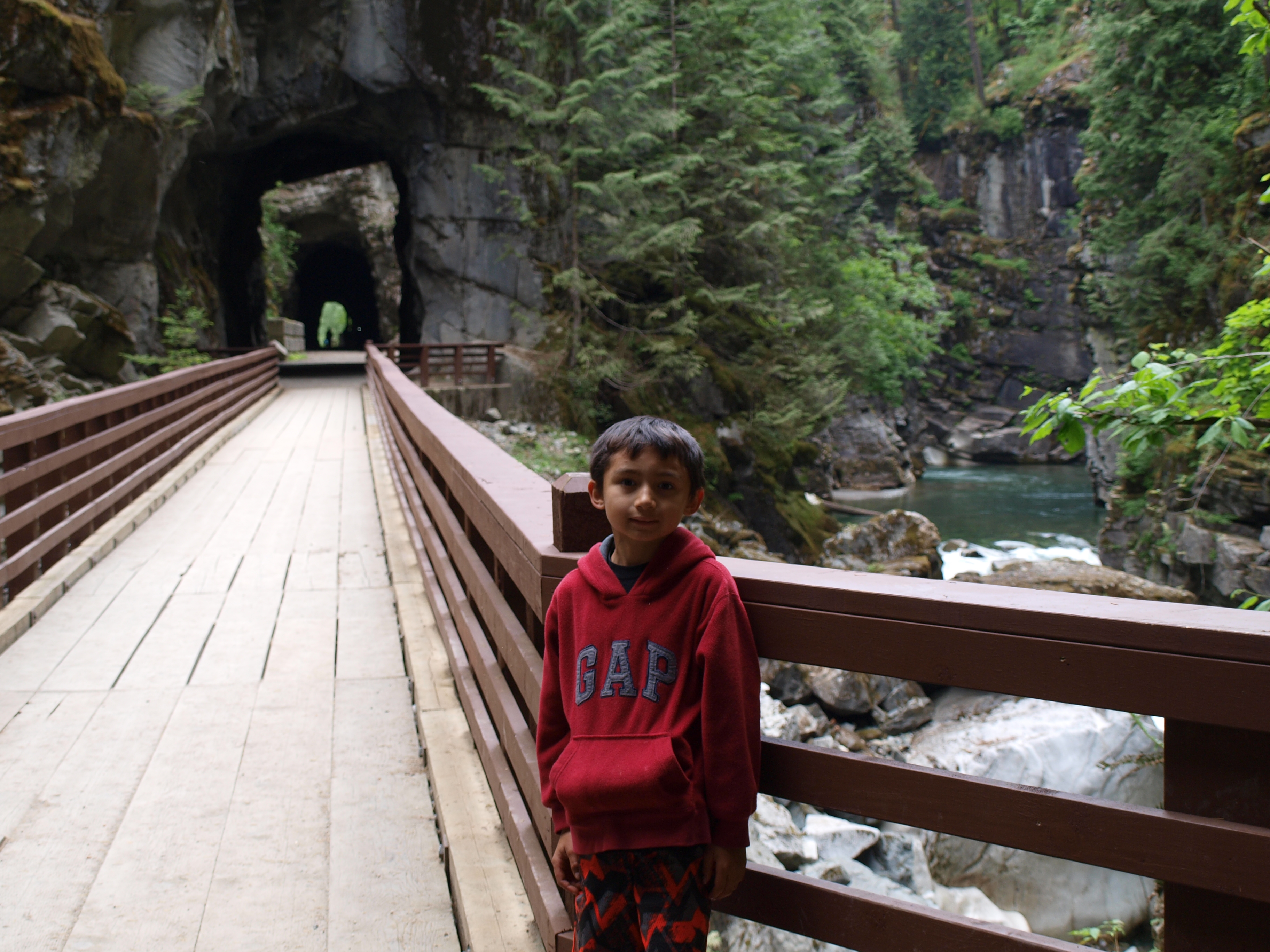
OthelloTunnels

Overall it was a great trip.  We did some initial sampling on two claims and saw some cool parts of Southern BC.  I have other claims in the area and will be back soon.  There’s something about the Tulameen that gives an eerie feeling when you are out there.  It could be the remoteness or the history of the area.  Maybe its the platinum, whatever it is I like it and can’t wait to explore the region in the future.
Where Does Placer Gold Come From? – Part 3 Placer

Where Does Placer Gold Come From? – Part 3 Placer

Placer gold mining has been practiced for thousands of years with evidence dating back as far as 2600 BC in ancient Sumeria and Egypt.  The technology required is minimal with only a gold pan you can refine gold in a placer deposit.  The word “placer” comes from the spanish word meaning “pleasure”.  Perhaps an allusion to the delight of finding precious metal in a river bank.  The word was spread as gold bearing gravels were discovered in parts of North America colonized by Spain.  In fact the discovery of gold the primary motivation for Spanish explorers to dig deeper and deeper into the newly discovered continent.

Big Al Jig

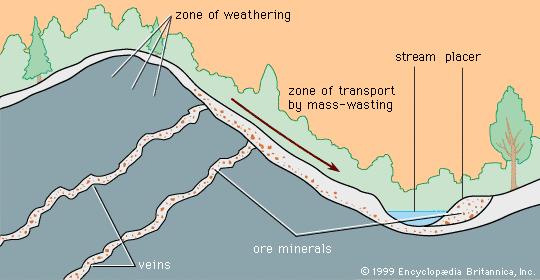
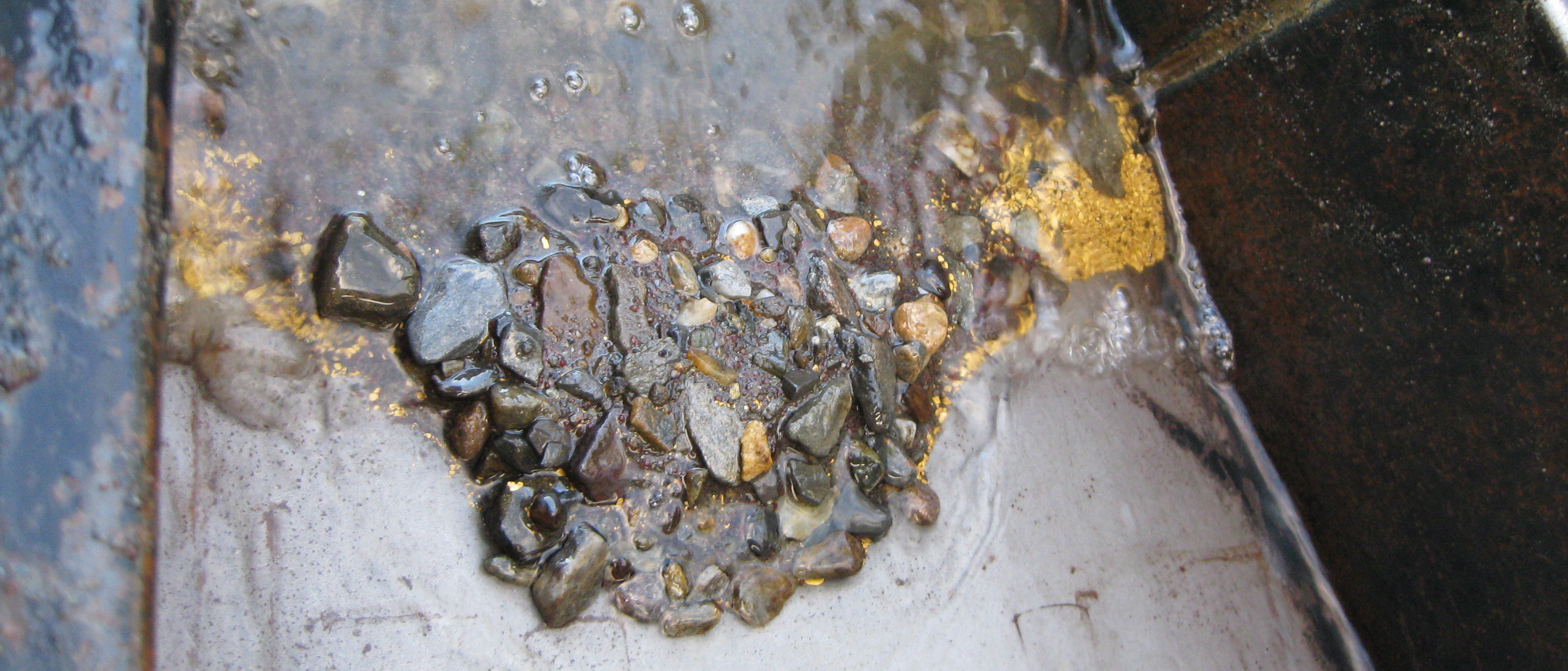
As we discussed in the part 1 and part2 gold is created in fantastic cosmic explosions.  It has traveled across the universe and made up a small part of the material that the earth formed from.  Tectonic and volcanic forces collected gold in concentrated lode deposits where it can be mined.  The concept of how gold transfers from lode deposits to placer deposits is pretty straightforward.  Rock holding the gold bearing veins or ore is slowly chiseled and broken by weathering and erosion.  The erosive forces of water, wind, and ice transport rock fragments into drainage systems such as streams and rivers.  Gold and other heavy minerals will settle out in areas in the stream where the water loses momentum or creates a trap.  These traps form into placer deposits over time.

Erosion

Placer deposition is driven by gravity.  Gold is very dense, meaning that compared to another substance of the same volume it experiences a stronger pull of gravity.  There are other principles of physics that apply to placer deposition.  The property of inertia is the resistance of any physical object to any change in its state of motion.  Less dense objects require less force to move them and in the case of a stream will travel farther and faster than heavy objects.  Gold has a density that is twenty times that of water and about 8 times the density of sand.  Another factor in the formation of placer deposits is Archimedes’ principle which states that the force of buoyancy on an object is  equal to the weight of the displaced fluid.  This principle was historically used to measure density of gold by Archimedes himself.  As gold is many times more dense than water the force of buoyancy on submerged gold particles is much less than the force of gravity.  So gold in a stream is held in place by gravity and resists movement due to its weak buoyancy and strong inertia.
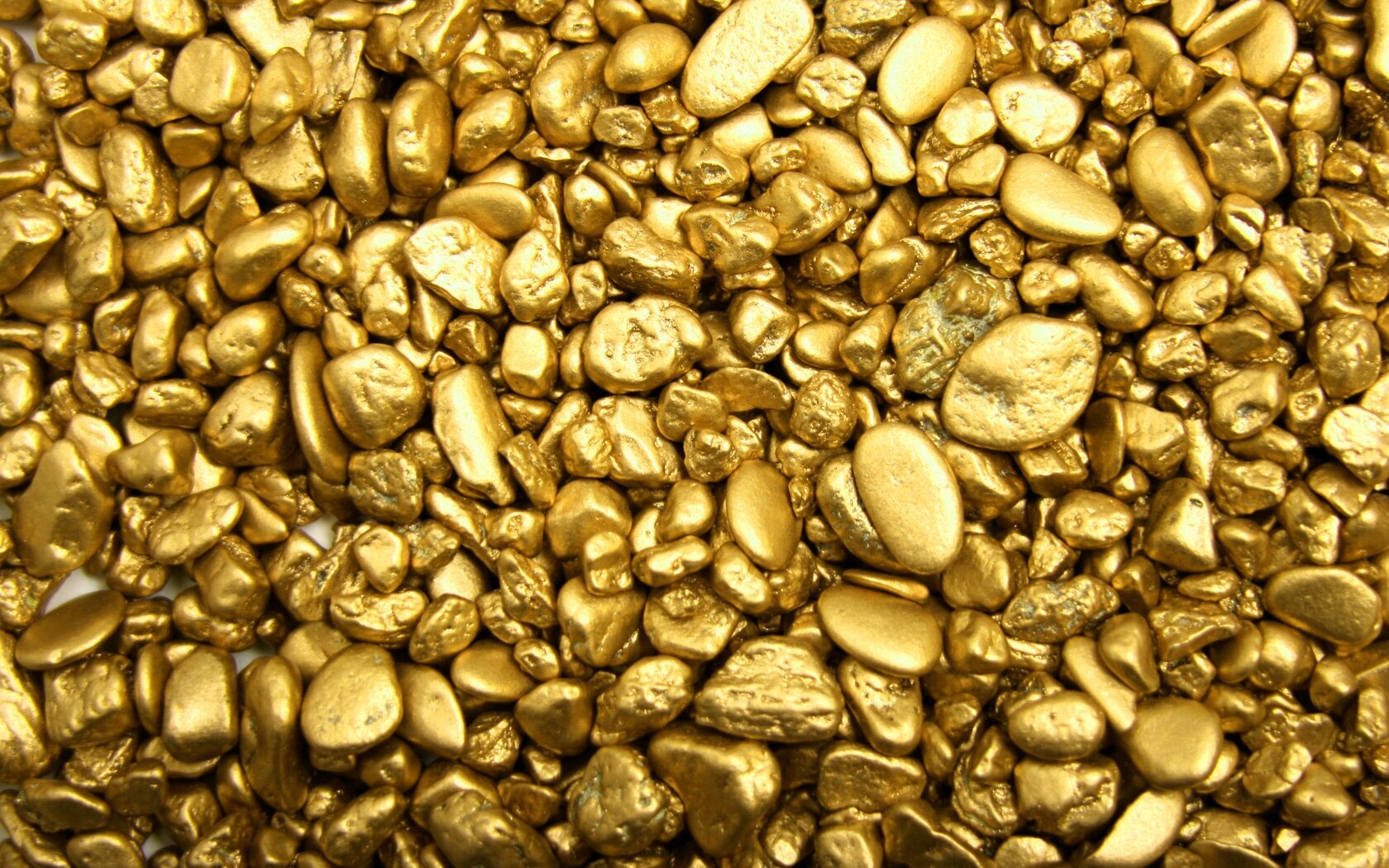
Nuggets

There are several types of placer deposits.  There are alluvial placers, eluvial placers, beach placers, eloian placers and paleo-placers.  For each type of deposit there are miners who specialize in that type of deposit.  All placer deposits have concentrated gold from its source in some kind of trap.  The vast majority of the placer gold that is mined in the world is of the alluvial variety.

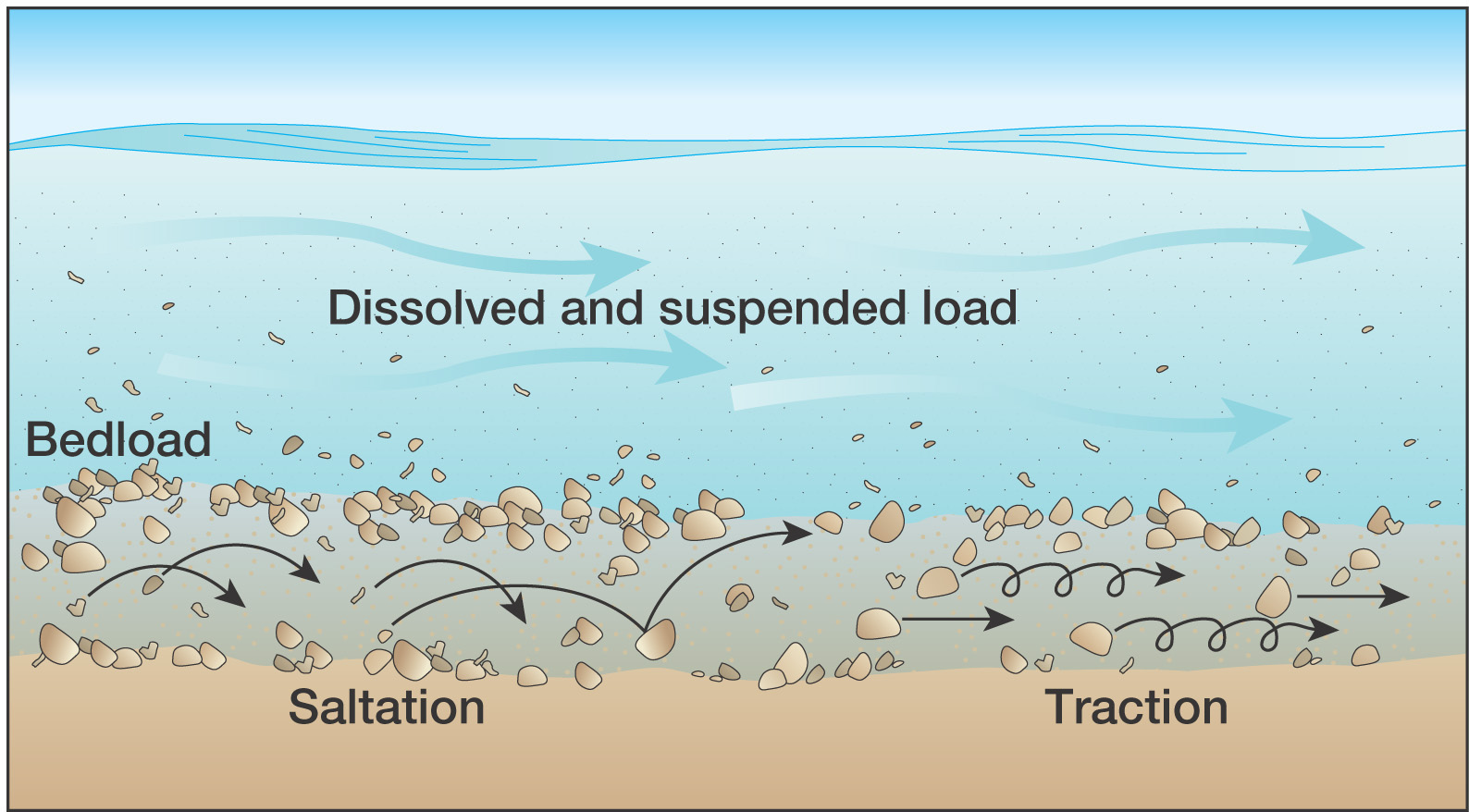
Alluvial placer deposits are formed in watercourses such as creeks, rivers, streams and deltas.  The gold is eroded from lode deposits and carried into the watercourse through rains and melt.  Once into a stream it can be moved great distances.  Gold does not move easily in a stream due to the inertia and buoyancy forces described above.  It takes many years for gold to make its way into a stream and to travel within it.  The gold will move along the bottom of the stream until it reaches a point where the water loses velocity or it is physically trapped.  Typically gold will accumulate on the inside bends of a river where the water velocity is lower.  Large rocks or outcrops can create a natural riffle or eddy where the water slows down and dense material will accumulate.  Waterfalls are another great trap for gold.

Alluvial placers can be broken into several groups.  Flood gold is placer gold that moves during annual floods or other flood events.  Gravel bars and upper sections of stream sediment are where flood gold is usually found.  This type of deposit generally consists of small flake and flour gold since they move more rapidly than nuggets.  Flood gold is actively being deposited and will replenish year after year

StreamSediment

Streambed placer deposits are essentially the same as flood deposits except that they no longer move.  Streambed placers are found in a current watercourse.  These deposits typically consist of gravel that is settled in the stream bed.  To produce a streambed placer you have to mine under the water.  Techniques that can be used are sniping, suction dredge, or diverting the water using a dam such as a wing dam.

The third type of alluvial placer deposit is a bench placer.  Bench deposits are part of the old stream bed before it cut into a deeper channel.  Benches can contain huge amounts of gold if the river carried gold at that time.  A bench is typically flat on top and may appear like steps coming down the valley side.  Benches can be mined using conventional mining equipment since they are usually high and dry above the current river.

OldSchool

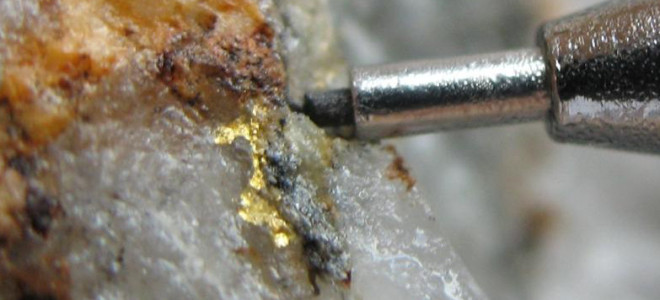
Eluvial placer also known as residual placer deposits are formed before any water transportation has taken place.  These deposits form close the source of hard rock gold.  Eluvial placers will contain much large particles of gold than other types because it takes a lot of energy to move large nuggets.  Often quartz will be found with gold still attached in Eluvial placers.  These types of placers are formed by weathering and decay of the host rock that holds gold.  Areas where there is a lot of iron can break down rapidly as the iron oxidizes.  The lighter overburden is generally washed away and unsorted gravel and heavy material is left in place.  These deposits are generally small and very attractive to small miners they also are close to gold bearing veins which can be very exciting.

Beach placers are deposits that occur on the edges of large lakes or the ocean.  The wave action on the beach is the mechanism that concentrates gold and other dense minerals.  Gold can either be carried to the beach by an alluvial system or eroded directly by waves.  A famous beach placer is the deposit in Nome, Alaska which is featured in the TV reality show “Bering Sea Gold”.

CreepSaltSusp

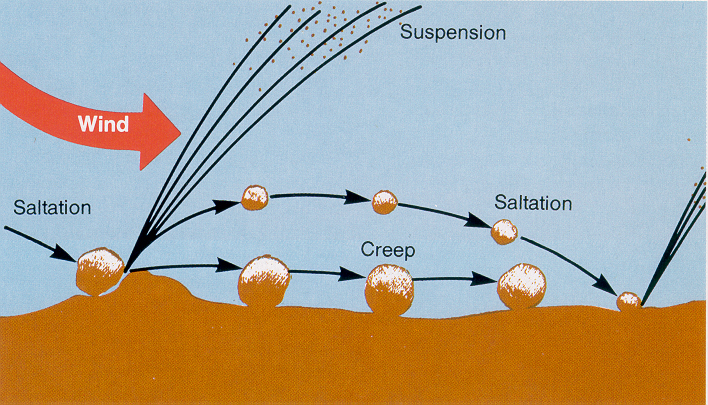
Eolian placers form in areas where wind is the main mechanism of erosion and not water.  Eolian placers are similar to Eluvial placers in some ways, they occur close to the hard rock source, and are poorly sorted.  Wind does a terrible job of moving gold.  In Eolian placers the overburden is swept away by strong winds and leave the heavy ore behind.  They occur primarily in desert regions such as the arid regions of Australia.

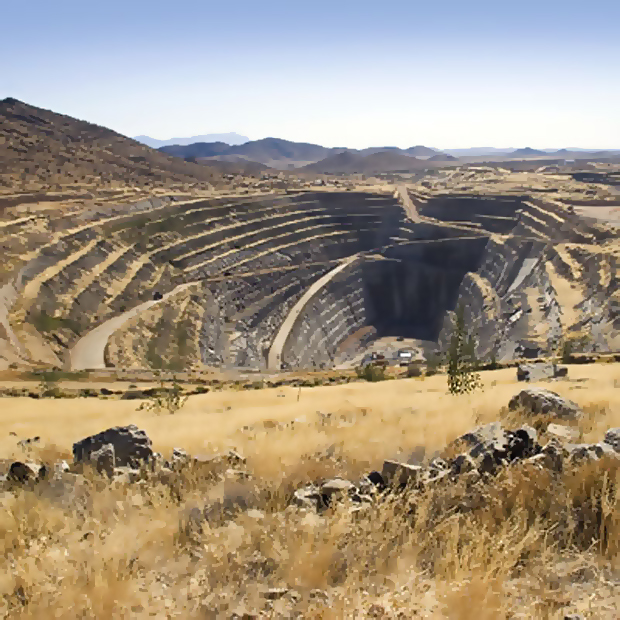
The last type is paleo-placer deposits.  These are any of the above placer types that happened a long time ago.  By a long time we are talking about millions of years.  Paleo-placers were once placer deposits but over time they have been hidden and covered in sediment.  There is often no sign at the surface of ancient river systems below.  Paleo-placers can be ancient river channels, benches or sedimentary rock formed from old placers such as quartz pebble conglomerate.  This kind of deposit can amount to huge quantities of gold and make you very rich.  The largest known gold deposit in the world in Witwatersrand, South Africa is one of these.  Over 1.5 billion ounces of gold has been mined in Witwatersrand.  Deposition occurred approximately 3 billion years ago in Witwatersrand, and it is estimated that 50% of all the gold mined on earth came from that deposit.

Witwatersrand

That’s the story of where placer gold came from.  It was created in incredibly powerful explosions from dying stars.  It made up the earth as it formed and was squeezed into concentrated deposits by volcanic processes.  The veins eroded into river systems and hopefully made its way into your gold pan.  Gold’s unique properties of density and its resistance to corrosion and most other chemical reactions allow it to build into the kind of deposits that we can find and mine.


Where Does Placer Gold Come From? – Part 2 Deposits

Where Does Placer Gold Come From? – Part 2 Deposits

In part 1 of “Where Does Placer Gold Come From?” we discussed the origins of gold and how it appeared on earth.  Now we’ll discuss how it moves into mineable deposits.

LodeGoldwide

Gold is spread relatively evenly throughout the crust of the earth at approximate concentrations of 1 part per billion.  To put that into contrast, low grade mineable gold deposits need to be concentrated to at least 1 part per million which is about 1000 times more concentrated than the background.  High grade gold deposits are in the order of 20-100 ppm.  Gold concentrations are usually expressed in grams per ton, which is interchangeable to ppm.

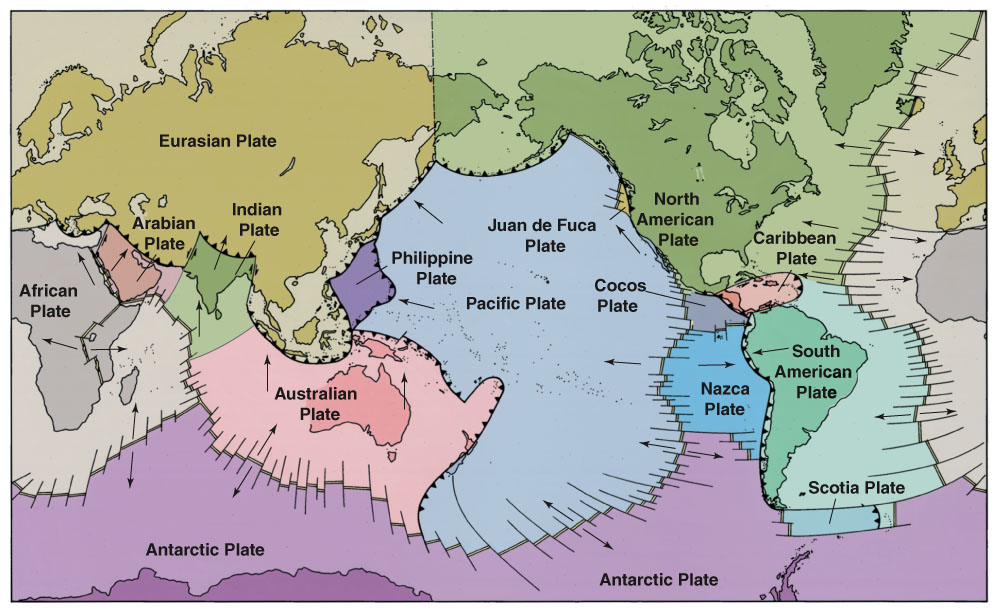
So if gold is evenly spread through the crust how does it become concentrated?  There are several natural processes that allow this to happen and they are all driven by the same force, plate tectonics.  Plate tectonics is the force that moves continents, creates mountains and most volcanoes, and of course earthquakes.  The image below shows the current tectonic plates and their names.

Tectonic Plates

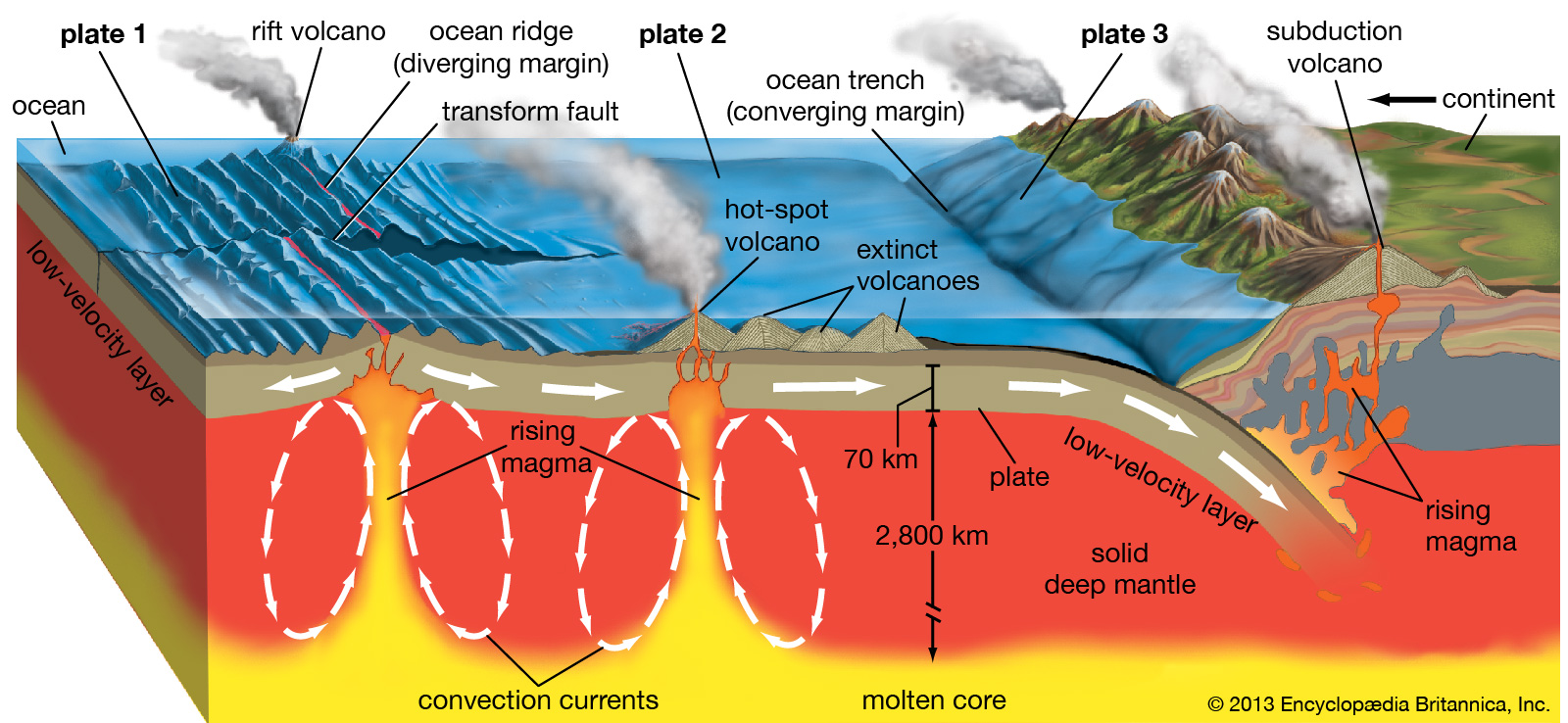
The plates are constantly moving, crashing into each other and subducting, they are pushed by convection currents in the mantle.  In the distant past there have been several supercontinents where all the continents had come together to from one.  Past supercontinents have names like Rodinia, Godwana and Pangea, it is predicted that a new supercontinent will occur in the next 250 million years.

Subduction

At the boundaries of these plates is where the excitement happens.  It is at these areas such as the West coast of North America where volcanic processes squeeze gold into veins.  There are two main ways that this happens.  Orogenesis (mountain building) takes place as the force of two plates hitting each other forms mountains as the edges of the plate buckle and slide.  In the mountain forming process rock is squeezed to the point of breaking and creates fissures and faults that extend deep into the crust.  These cracks allow heated and pressurized water to come up the cracks.

The other way is driven  by volcanoes forming from the subducted plate.  When the edge of the plate is far enough below the surface it re-melts and the newly molten rock builds up pressure.  This pressurized molten rock is what forms the volcanic chains inland from the subduction zone.  As volcanoes form they crack and fissure the surrounding rock and contribute to the same epithermal process.

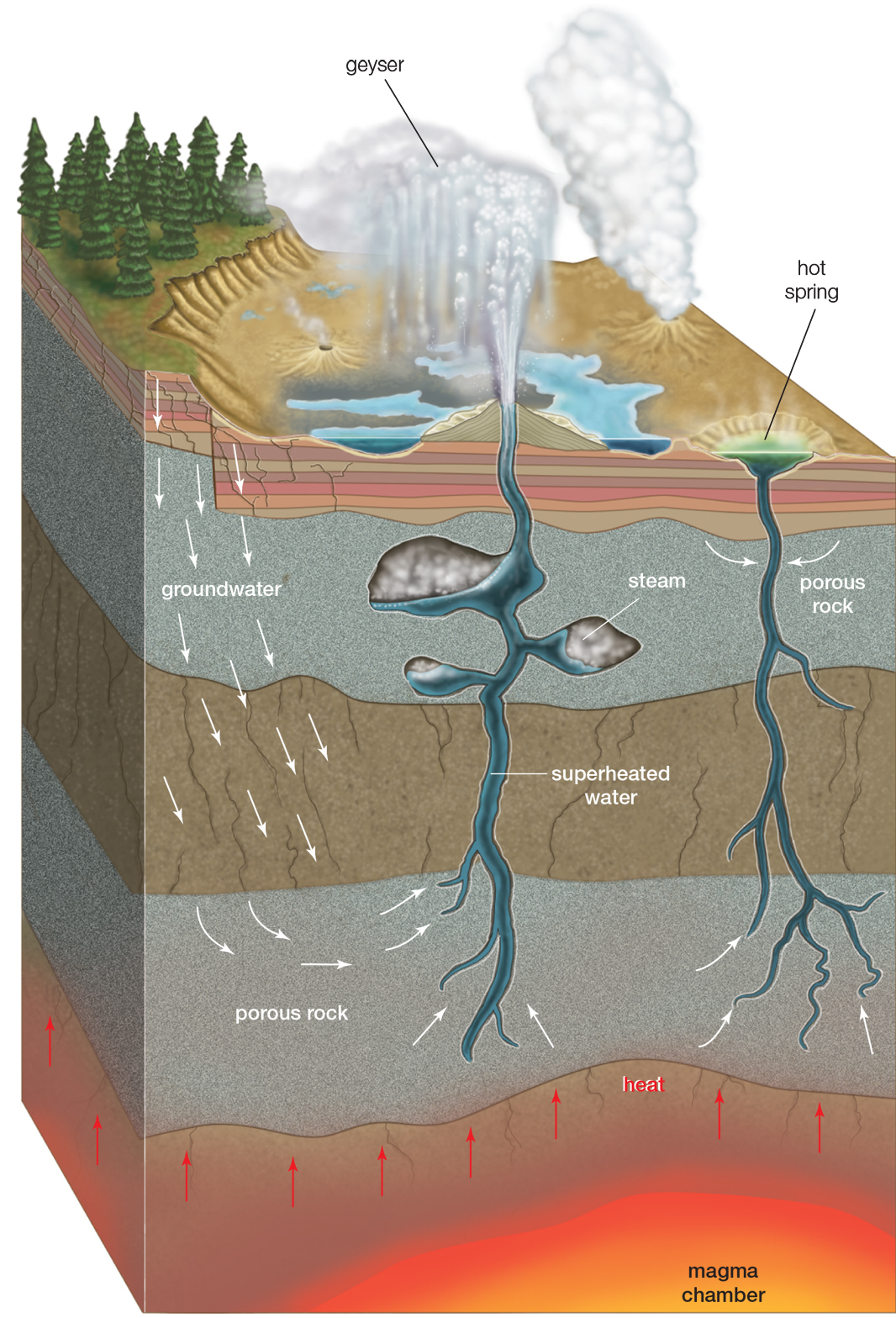
HotSprings

Imagine the rock as a sponge and when it is squeezed the water is expelled through the cracks.  It is actually the same way that hotsprings work but with more squeezing.  This kind of gold mineralization often takes place near volcanic or geothermal activity such as hot springs or geysers.  When the mineralized water cools it leaves behind the minerals in solid form which we then call a vein.  Typically we are looking for quartz veins.  Vein deposits are often called lode deposits in artisanal miner vocabulary.  Placer miners will often refer to the “mother lode” that is the quartz vein or veins that broke down into rich placers.


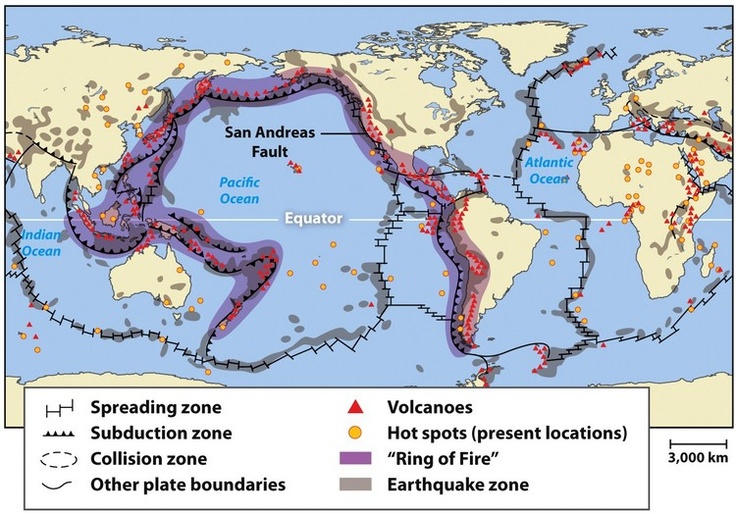
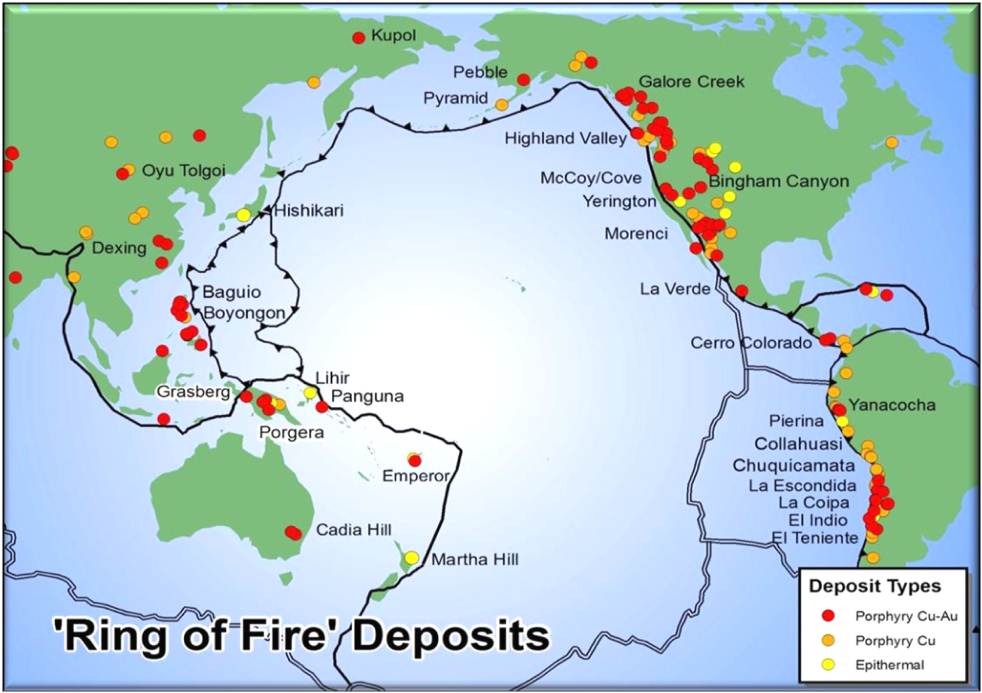
There are other hard rock gold deposits other than epithermal lodes.  There are Greenstone, volcanic massive sulphides, porphyry and Calrin trend deposits.  All of these depend on volcanism as well and occur in similar ways as described above.  Areas high in volcanoes and seismic activity are good places to look for gold.  The Pacific ring of fire is an area surrounding the boundary of the Pacific tectonic plate.  This area contains 3/4 of the worlds volcanoes and is responsible for 90% of the world’s seismic activity.  In the gold rushes of the 1800’s prospectors envisioned a world wide gold belt.  It wasn’t until the 1950’s that plate tectonics became an accepted scientific theory and decades later we mapped out that gold belt.RingofFireROFdepositsOf course not all gold is found in the ring of fire.  The largest known gold deposit on earth is in Witwatersrand, South Africa.  It is estimated that 50% of the gold mined on earth has come from this mine.  Witwatersrand is actually a huge placer deposit from 3 billion years ago.    In my next post we’ll finally get to the formation of placer gold deposits.  Stay tuned.

Check out Part 3 on how gold placers form:

Where Does Placer Gold Come From? – Part 3 Placer

Gear Review: Baofeng Handheld Radio

Gear Review: Baofeng Handheld Radio

Communication is essential for any placer gold operation to be successful.  It is also important for safety, in the event of an emergency communication can make the difference between life and death.

When out prospecting you are usually away from cell service.  So you need another way to communicate.  For person to person communication you can’t beat a handheld radio.  Even if you are within cell range radios are more convenient because of their field ruggedness and long battery life.

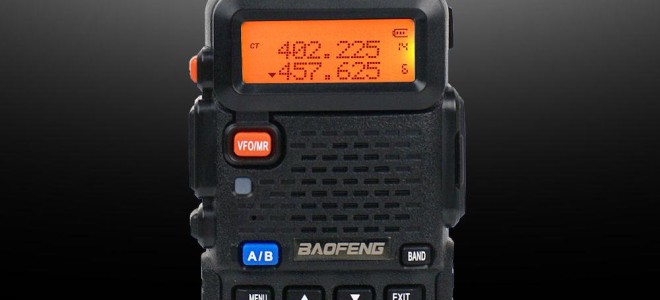
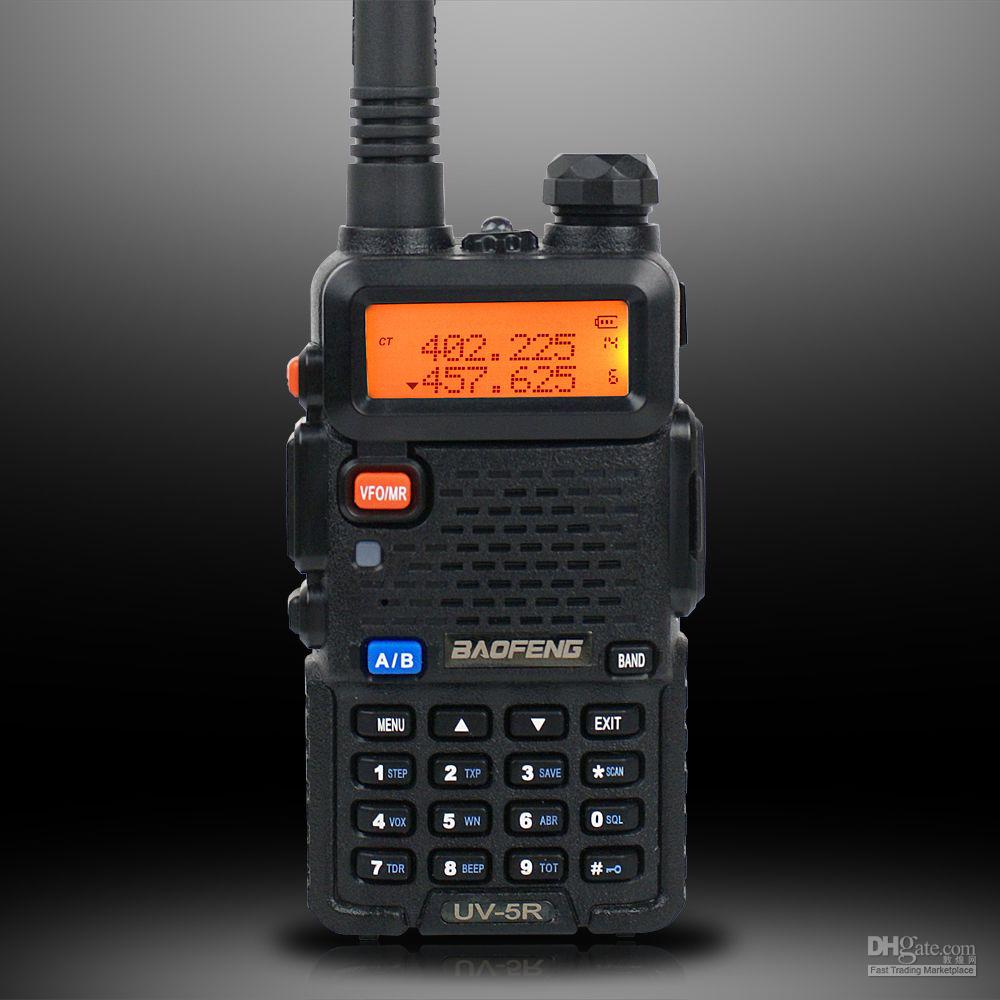
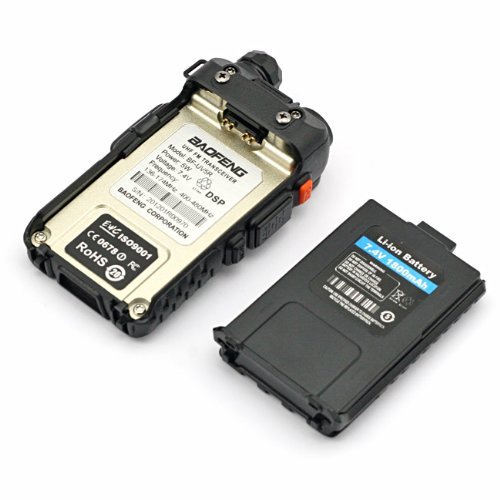
baofenguv-5r

The Baofeng UV-5R is an entry level dual band ham radio manufactured in China.  You can buy these radios for under $30 on Amazon.com!  In larger commercial operations, and even smaller ones, companies will use much more expensive radios such as the Kenwood TK-3402.  Those radio retail over $300 and have way less features.  Also to program a Kenwood radio you usually have to take it to a dealer.  You can program them yourself with the right cable and software but almost everyone brings them to a dealer.

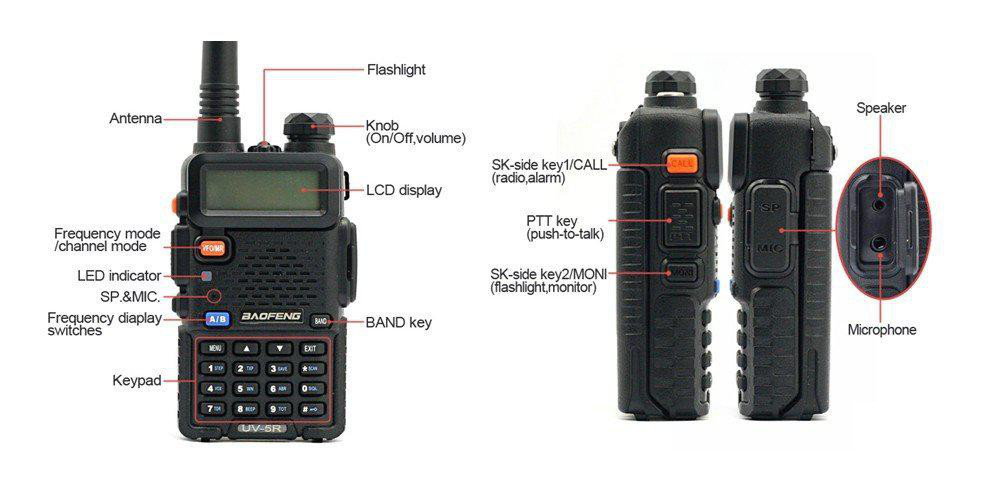
BaofengFeatures

The Baofeng is a hidden gem.  After years of using much more expensive radios I had low expectations for a sub $30 Chinese unit.  I was blown away when I got these radios.  The biggest advantage that the Baofeng has is the ability to program radio frequencies on the fly.  When you roll up to a BC forest service road or active logging road they have the frequency posted at the start and you are supposed to call out the kilometers as you travel up the road.  The reason you want to do this is because there are large logging trucks and other equipment working up there.  When you are able to communicate with them you can prevent getting hit or trapped on a tight road with a logging truck.

You’ll wonder why other radios don’t allow field programming.  That is because you legally require a licence to transmit on many channels.  You could get in a lot of trouble with the Baofeng radio because you can program any channel that you want.  It is easy to listen in on police or ambulance channels.  I do listen to the police and other people some times for entertainment.  You can also transmit which is illegal.  That being said in the event of an emergency it would be worthwhile to contact help directly.

The range on these radios is also impressive.  They transmit at 4 watts, compared to the 5 watts of the commercial grade Kenwoods.  I’ve tested the range on the Baofeng radios at over 10km, they could potentially go further with good line of sight.  There is a dual watch feature which allows you to monitor two channels at the same time.  When you hit the PTT button it will transmit on the last channel that had activity.  There is a scan feature on the radio but it is very slow.

51hIZkiz13L

The stock battery will last up to 20 hours.  That is pretty decent, I wouldn’t expect any other radio to last longer.  I bought spare batteries for mine, they are also available for a reasonable price.  They are available for about $6.00 each at amazon.  The UV-5R features VOX capability which is usually only available on much more expensive radios.  VOX gives it the ability to trigger the PTT by your voice, basically hand free operation.

The Baofeng can easily be programmed to work with repeaters, such as the BC Forestry repeaters.  This feature adds to the versatility of this radio as an emergency communication device.  Programming on the handheld can be a little confusing although entirely possible.  I recommend using a PC and some free software.  There is a great program called CHIRP that makes programming these radios as easy as filling out a spreadsheet.  You can download CHIRP for free here.  There is also a great manual put together by the Chinese radio project.

51l3l5BpKkL

The UV-5R has memory for up to 128 channels.  It also has FM radio capability meaning you can listen to terrestrial FM radio stations.  There is a bright LED light included as well which is a nice feature.  The small form factor is kind of nice, I often forget I have it on me.  It has a belt clip but can fit nicely in a pocket as well.

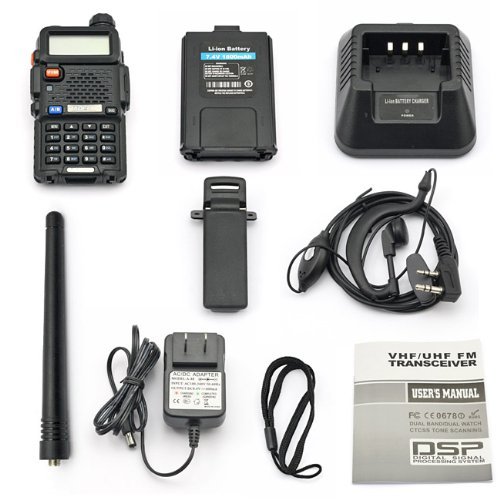
In the box is the radio itself, the AC drop charger, the antenna, battery, belt clip, headset (works with VOX) and an english manual.

The Baofeng UV-5R is available on Amazon.com for an amazing price.

Baofeng UV-5R ($27.63)baofengSmalluv-5r

I’d also recommend:

Baofeng USB Cable ($5.99)

Extra Battery ($5.89)


Update:

Baofeng has released a new version of this radio with 8 watts of transmit power.  That gives it much more range than most commercial handheld radios such as the Kenwood TK series which operate at 5W and sell for over $300.

BaoFeng BF-F8HP ($62.89)

Where does placer gold come from?

Where does placer gold come from?

If you are trying to find gold it helps to know where it came from.

gold-panning

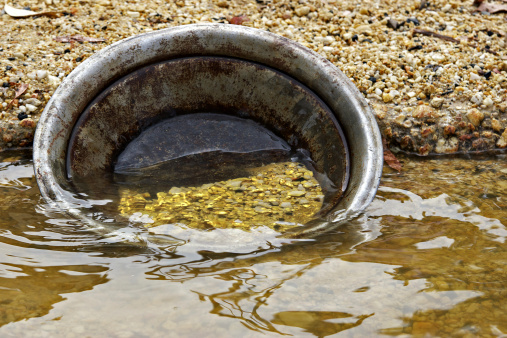
To start with there is only one kind of gold.  Placer gold and lode gold both come from the same place and are made of the same stuff.  Gold is not actually formed on earth it was formed millions of years ago in distant stars.  In large stars, much larger than our sun elements are combined together in their cores through the process of nuclear fusion.  Our sun like all stars runs on fusion too but it does not have enough mass to produce atoms larger than carbon or oxygen.  Larger stars can generate the gravitational force and heat in their cores necessary to produce elements as heavy as iron.  To create things like gold even more energy is required and that takes place in a supernova.


Supernova

When a large star runs out of light matter the fusion reaction is no longer sustainable and the star begins to collapse on itself very rapidly.  The supernova collapse takes place in a matter of seconds.  While the star is collapsing it produces heat very rapidly and explodes in what is essentially a humongous nuclear bomb.  Supernova events are so bright and powerful that they are brighter than then entire galaxy that hosts the star.  This nuclear explosion allows for higher energy fusion reactions that can produce heavy elements like gold.  The explosion also scatters the newly created material over great distances.
SolarNebula

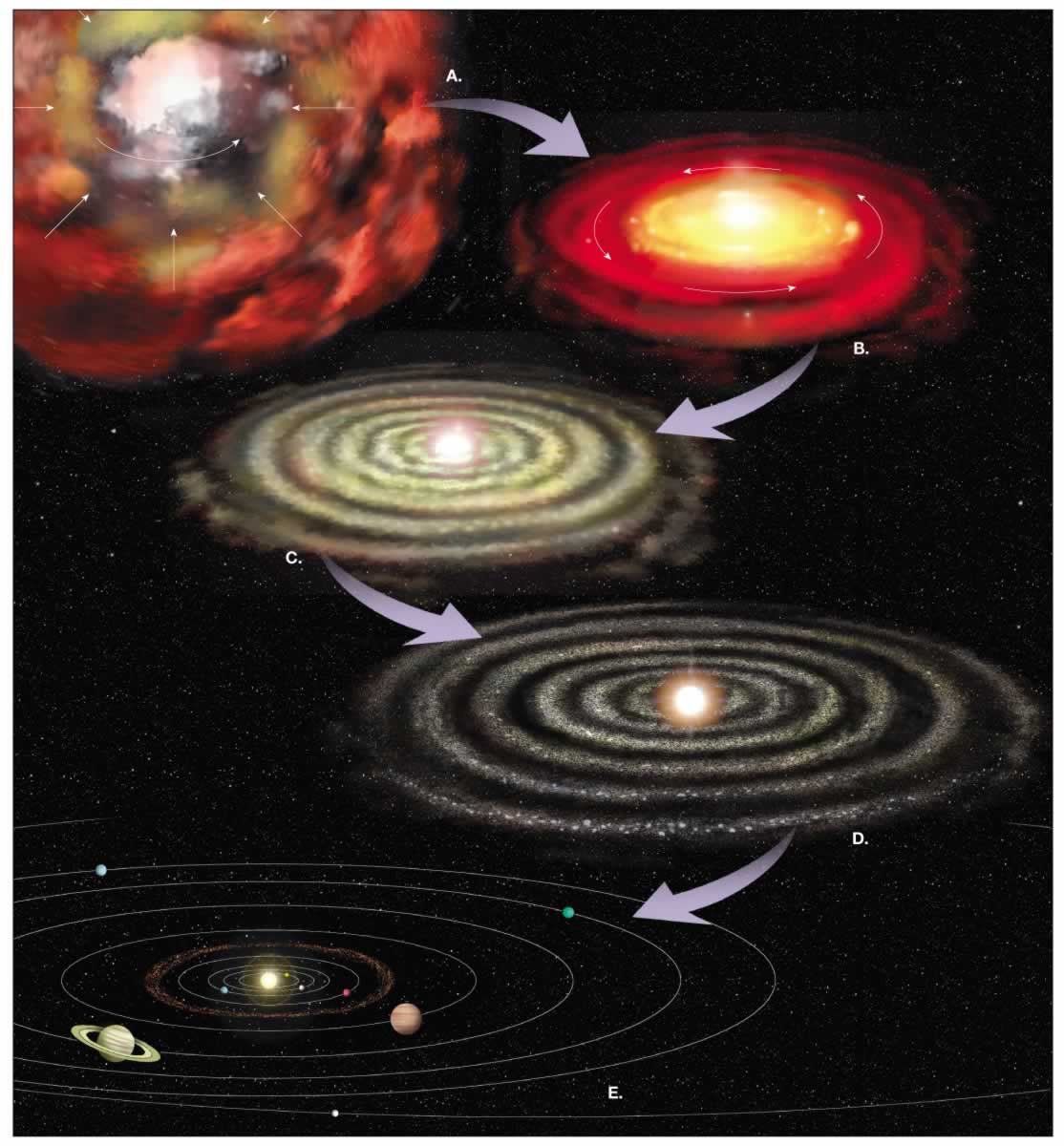
So how did the star dust make it into the mountains and rivers on earth?  When our solar system began approximately 4.6 billion years ago it was a cloud of dust and gas called a nebula.  This nebula was composed of the remains from older stars that had spread their guts around the universe in supernova explosions.  The molecules of the nebula naturally pulled on each other by the force of gravity growing more and more dense.  As the nebula was collapsing in on itself it also started to spin faster and faster.  The condensing and spinning action formed the nebula into a disk, much like you spin dough into a pizza.  In the center where the force of gravity is the strongest a new star was created, our sun.  The swirling mass around the sun clumped together into the planets, moons, asteroid and comets that we see today.
Early Earth

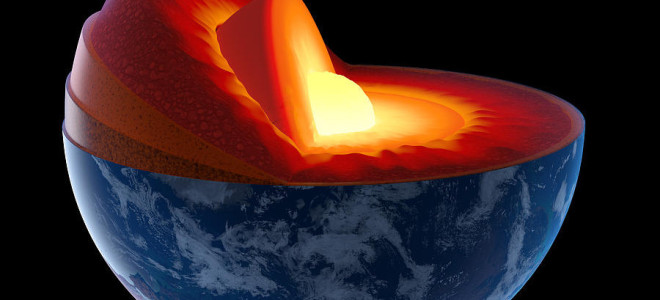
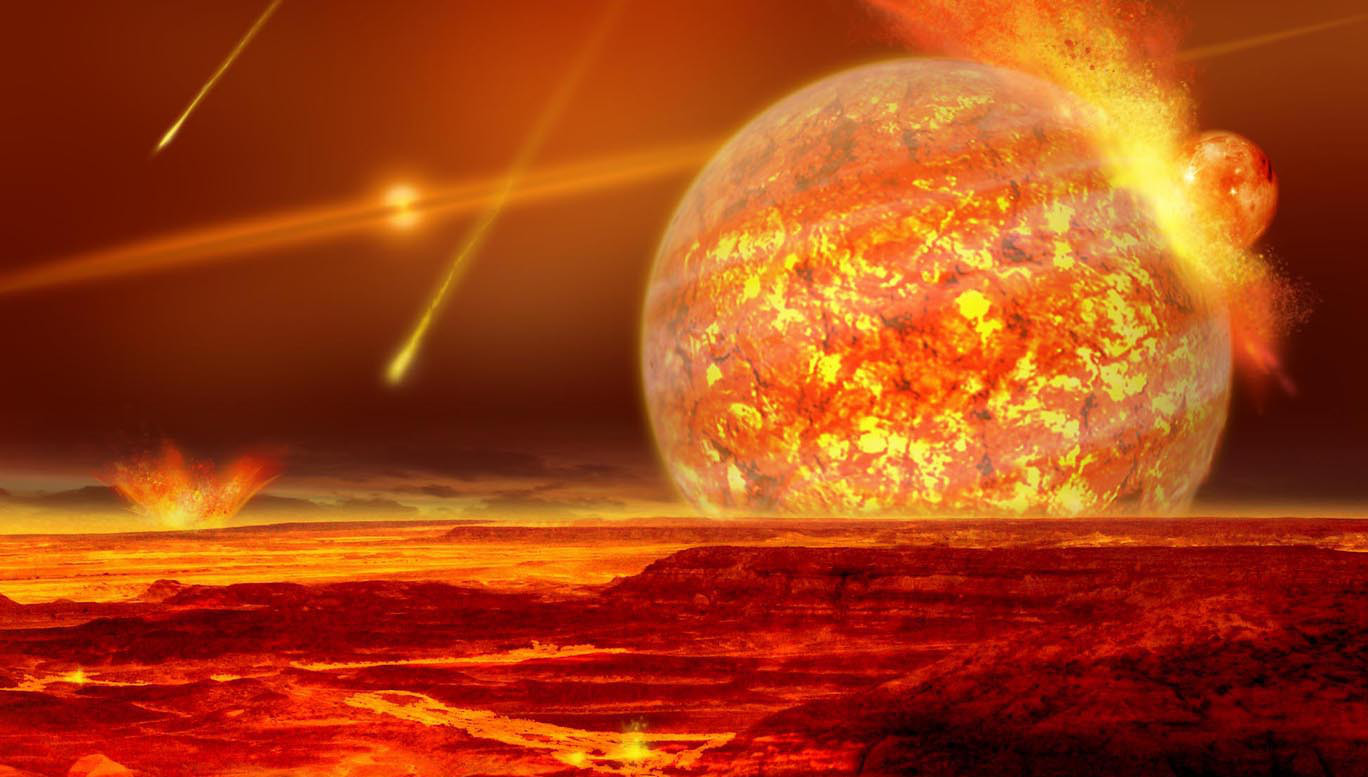
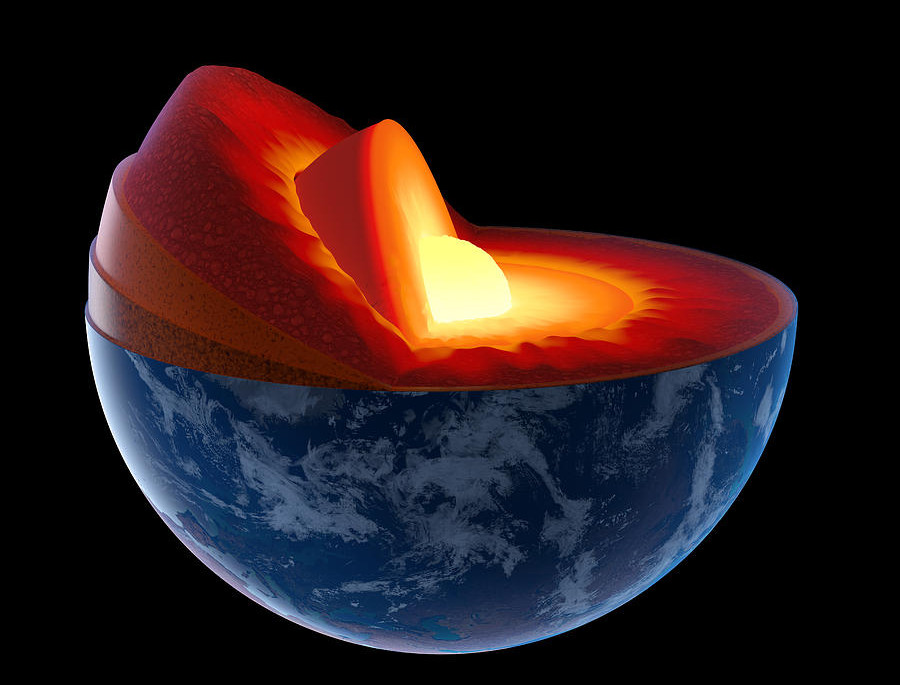
The early solar system was different that it is today.  The big planets did not form all at once, it was a gradual process.  Small plantoids formed first and crashed and coalesced into each other to form larger planets.  In theory the distribution of gold was basically even in all the rocky material that made up the early solar system.  In the early earth, while it was still completely molten the heavy material (such as iron and precious metals like gold) all sunk to the center of the planet to form the core.  The process is similar to the way that dense material sinks to the bottom of your gold pan.  If you could mine the core you would be very rich but it would be very difficult with current gold mining equipment.  Current scientific theories estimate that there is enough gold in the core to cover the surface of the earth with a 4 meter thick layer of pure gold.


earth-core

We can only reach gold that is trapped in the crust of the earth.  The precious metals in the crust were put there by meteor bombardments that took place after the crust had formed.  As these meteorites crashed into the surface of the earth they disintegrated and mixed their material into the upper mantle.  The meteorite guts had the effect of enriching the amount of precious metals in the crust.


So we know where gold came from and how it was formed.  Stay tuned for a future post to learn how the gold formed into deposits in the mountains and streams that we mine.


Check out Part 2 & 3 here:

Where Does Placer Gold Come From? – Part 2 Deposits

Where Does Placer Gold Come From? – Part 3 Placer