
Passive-seismic bedrock profiling
Map the bedrock before you pay to move it.
West Coast Placer uses passive seismic surveys to estimate how deep the bedrock is and show how it rises and falls beneath the surface. That can help placer miners trace possible buried channels, compare digging depths and put test holes where they are most likely to answer a useful question.
Send us the claim location, what you already know about the ground and what you need to decide. We lay out the survey around that goal, then provide practical maps, cross-sections and a written report.
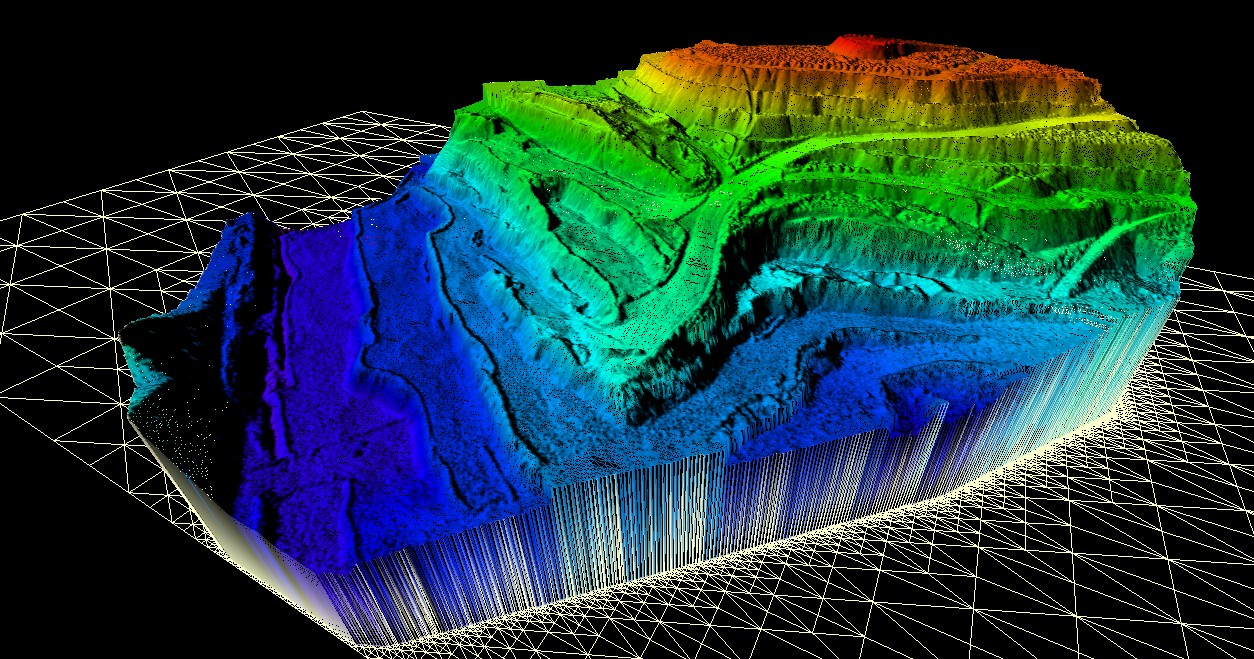
How deep is bedrock?
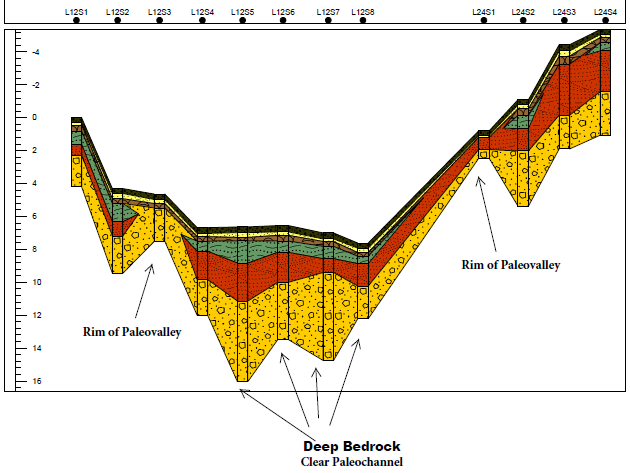
See how estimated bedrock depth changes along a survey line instead of relying on one test hole or exposed point.
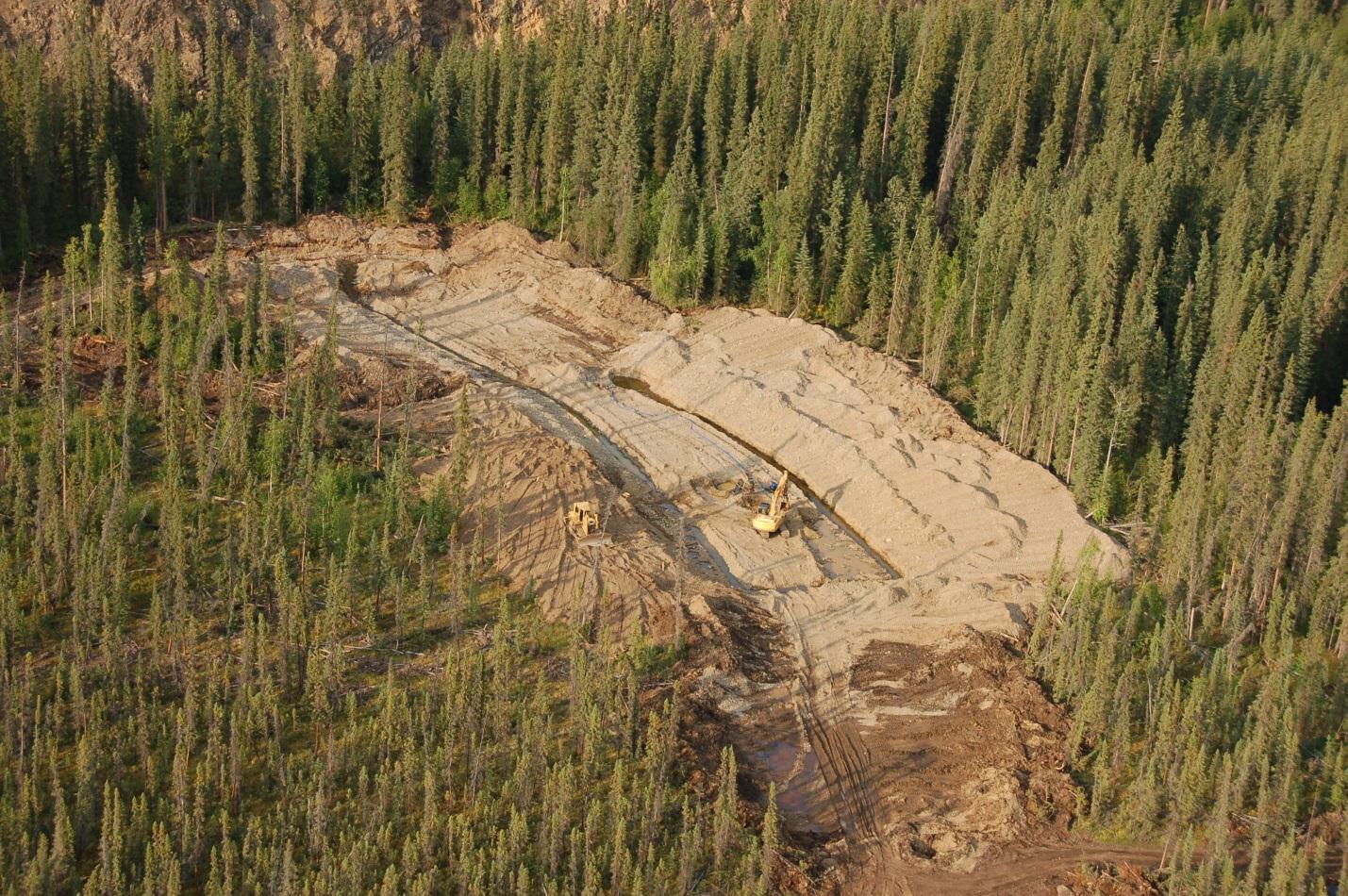
Where could a channel run?
Look for lows, benches and changes in the bedrock that may be worth drilling, testing or following with another survey line.
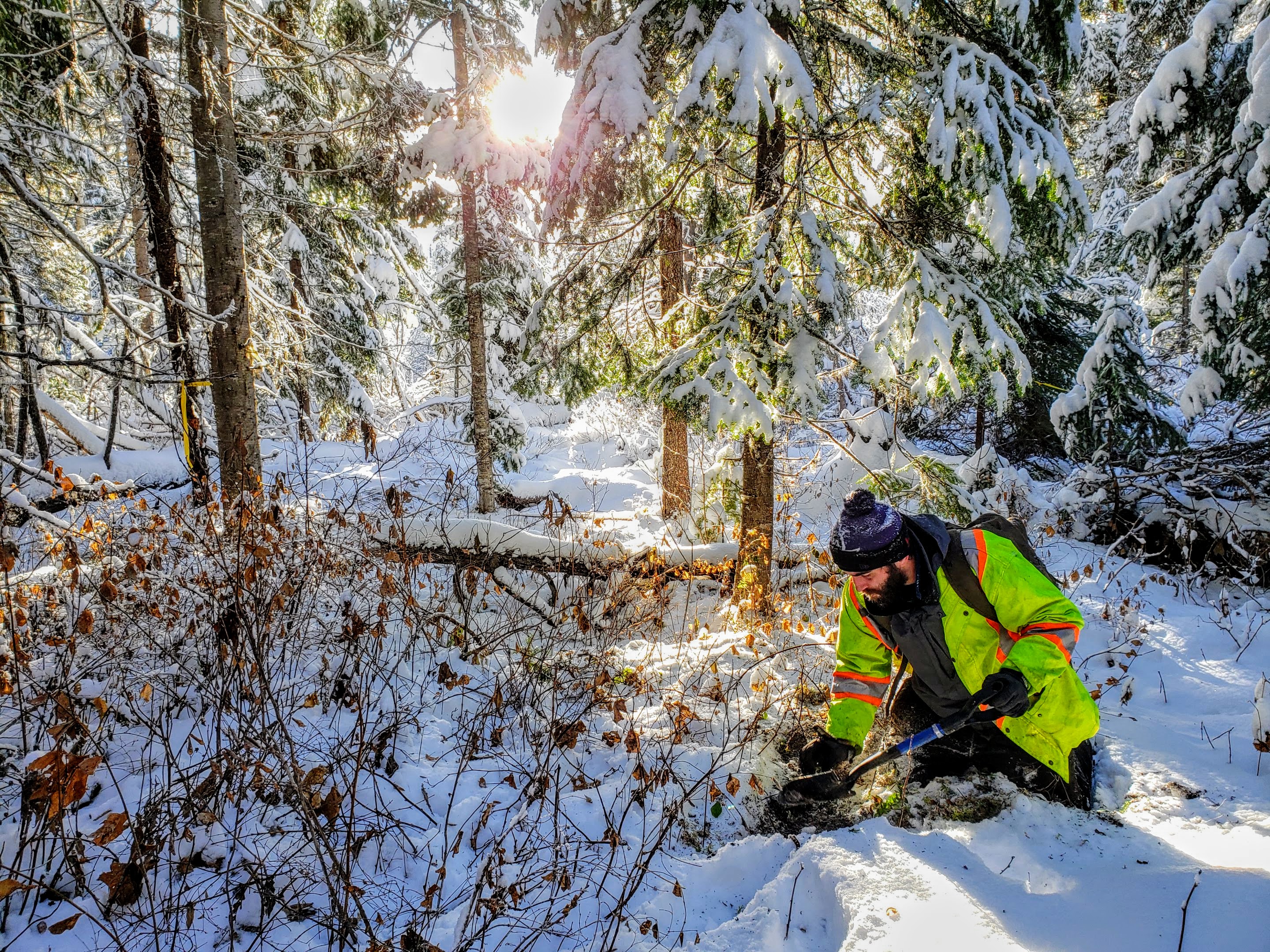
Where should the next dollar go?
Use the results to focus drilling, testing or excavation—and avoid spending first on ground that appears less promising.
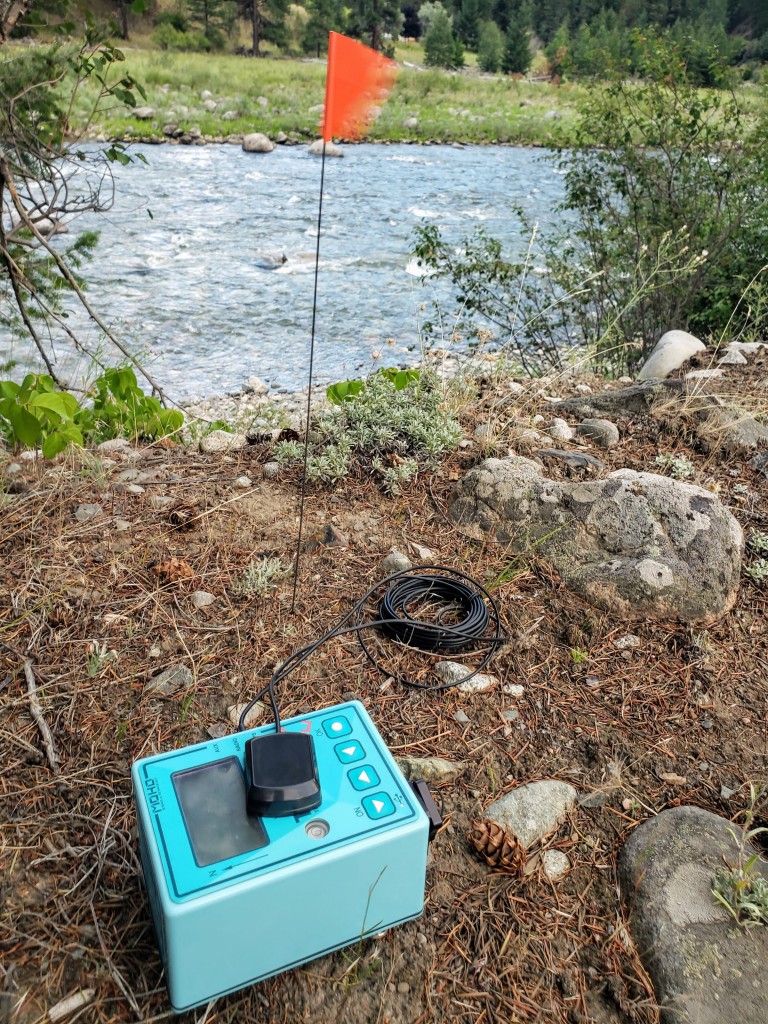
Field acquisition / passive seismic station
The method
Find the channel before you start digging.
- 01
Start with your ground
We review your claim, access, known bedrock and any drilling or mining history, then lay out survey lines around the ground you want to understand.
- 02
Survey the lines
We take portable passive seismic readings at planned points across the claim. There is no drilling, blasting or active energy source required to collect the readings.
- 03
Map the buried bedrock
We turn the readings into estimated bedrock depths and look for lows, benches and changes in shape that may point to a buried channel.
- 04
Plan the next move
You receive maps and cross-sections you can use to choose where to drill, test or dig—and where more stripping may not be worth the cost.
What you receive
Results you can use to plan the next move.
The exact package depends on the claim and survey. A typical project shows the estimated bedrock depth, how it changes across the ground and what the results may mean for the next stage of exploration.
- 01Estimated bedrock depths
Depth estimates tied to each surveyed point on the claim.
- 02Cross-sections
Side views that show where the bedrock rises, drops or forms a possible low.
- 03Maps and digital files
Clear project mapping prepared for the agreed scope and the information available.
- 04Plain-language report
What we did, what the survey indicates, its limitations and practical observations for follow-up work.
Assessment work: survey results can support assessment reporting in BC and Yukon where the programme and submission meet the applicable requirements. Confirm eligibility and filing requirements for the specific tenure before relying on the work for compliance.
Use the right tool
Profiling shows the shape. Drilling tells you what is there.
Passive seismic does not find gold or tell you the grade, and it does not replace drilling. It helps estimate bedrock depth and shows lows, benches or other shapes that may be worth testing. Drilling or excavation is still needed to see the material and confirm what is actually there.
Other survey methods can also be useful in the right ground. The best choice depends on depth, site conditions and what you need to learn. We review the claim first and recommend a method only when it fits the job.
See placer drilling servicesField evidence
Read the work, not just the sales copy.
These public reports show the method on real placer projects in BC, Yukon and West Africa. They include the survey layout, results and limitations so you can see what the work actually delivers.
In the field
Featured on Freddy Dodge's Mine Rescue.
See the bedrock profiling system used as part of a real placer investigation. The programme shows the field process and how the result informed the client's next step.
Before the fieldwork
Common questions.
What does passive seismic bedrock profiling tell me?
It estimates the depth to bedrock at points along a survey line. Put together, those readings show where the bedrock appears to rise, drop or form a possible buried low. Results are estimates and depend on the ground conditions and the information available.
Can the survey find gold?
No. The survey does not detect gold or measure grade. It can show bedrock lows, benches and other shapes that may be worth drilling, sampling or excavating.
Does bedrock profiling replace drilling?
No. Profiling helps you decide where to test. Drilling gives you actual samples and is still needed to confirm the material, ground layers and gold grade.
What do you need to quote a project?
Send the claim location, access details, any drilling or mining history, the area you want to investigate, your timing and what you need to decide from the survey.
Where does West Coast Placer work?
West Coast Placer works worldwide. Most of our projects are in British Columbia and Yukon, and we have also completed work in Africa, Mongolia and the United States. Before recommending a scope, we review mobilization, access and site conditions for each project.